|
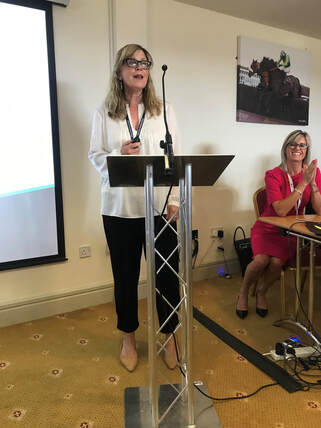
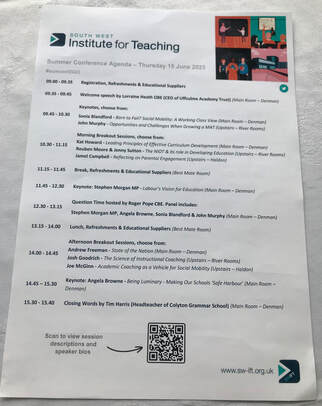
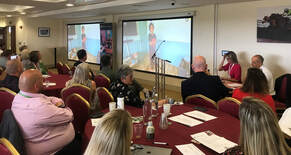
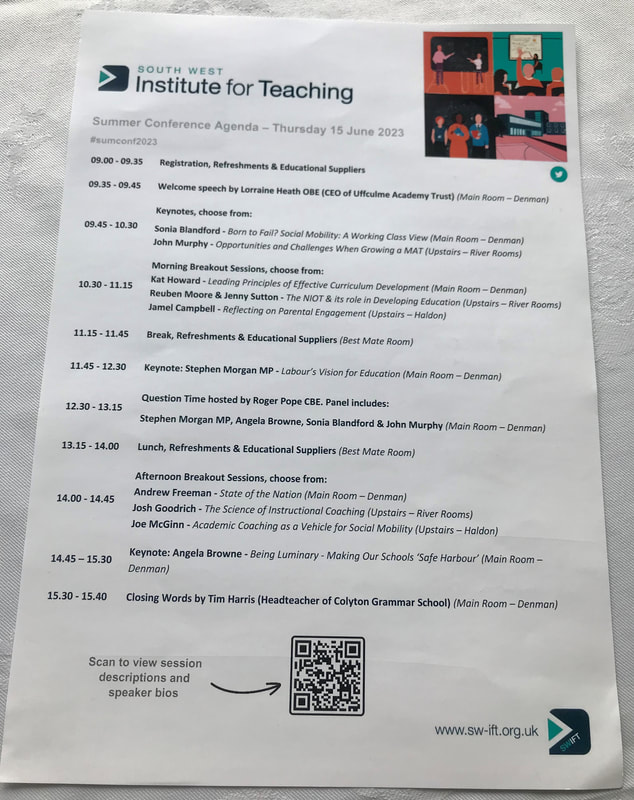
“Create a curiosity based on a genuine passion so that young people find their way to be instructors of their own destiny with faith in the system.” Some conferences have a buzz. And at our recent SWIFT 2023 Summer Conference there was a distinctive buzz. It started with delegates arriving early to the Exeter Racecourse venue ready for the conference; as well as enjoying the opportunity to network and engage with new and existing colleagues, and chatting to sponsors and exhibitors. An uplifting buzz. 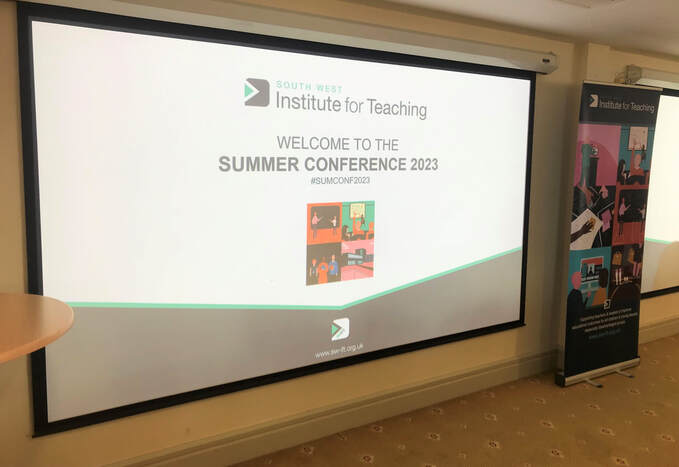 CEO of Uffculme Academy Trust (UAT), Lorraine Heath OBE opened the conference on a Reasons to be Cheerful note. Lorraine is a highly influential leader within the region and as a SWIFT Partner, UAT plays a central role in our Appropriate Body Service, Early Career Framework, and Continuing Professional Development programmes delivery.  Commending “such a professional generosity in the system” Lorraine praised schools and Multi Academy Trusts as “anchor institutions” who provide a support network at no cost, helping each other and sharing values, vision and moral purpose. Surely an example of optimism over experience. Amongst the uncheerful stories and pressures on schools, she highlighted the benefits of the Cradle to Career model on a school community and advocated courage to fail and to fail better that ultimately benefits young people. Change is coming and schools can make this better and wished everyone a great conference.
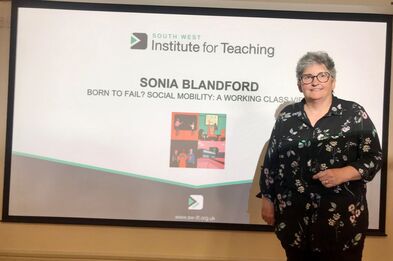
Professor of Social Mobility at Plymouth Marjon University, Sonia Blandford is already a SWIFT black belt and has been leading a series of professional development “extras” sessions for our Early Career Framework programme. Sonia’s educational experience and accolades are vast and varied and she is a prolific published author. As one of our conference keynote speakers Sonia spoke on a topic close to our hearts here in the South West, “Born to Fail? Social Mobility: a working-class view.” 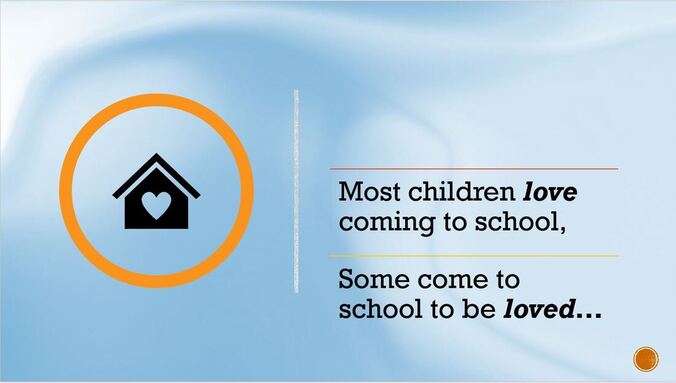 Social Mobility is achieving positive change in socio-economic status, and more widely building better futures for all, in terms of wellbeing, health, and engagement with all that life has to offer. Strategic steps can create hope and continue to develop new approaches to education and public policy, using the principles of mutuality for the benefit of all regardless of their starting point, to develop greater engagement with parents and carers, families, and communities that will ensure all children and young people are supported to access meaningful support, develop their aspirations, to increase their achievement and life prospects. With the essential objective to improve the foundations for life for all children and young people. Sonia shared how impactful leaders can be effective through a shared vision with a core set of values and beliefs shared by all staff; a commitment to creating an ethos and culture of achievement across the whole school; collaboration with parents, children and young people and others within and beyond the school, including other schools, to develop and share best practice and communication that encourages modelling positive engagement with all stakeholders.
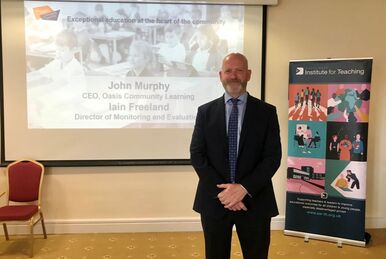
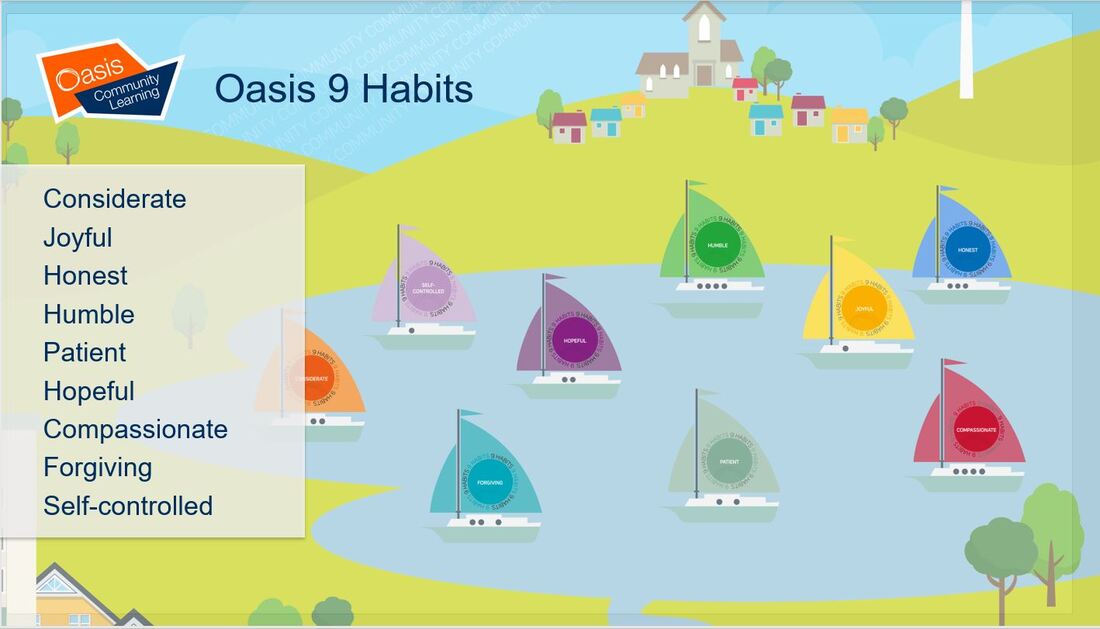
As CEO of one of the largest national Multi Academy Trusts, Oasis Community Learning, keynote John Murphy was well placed to talk on the “Opportunities and Challenges When Growing a MAT,” overseeing 52 Academies in 21 Local Authorities with over ten years of rapid growth that was founded in Grimsby. Harking back to his own school days, it almost felt like a confession as John admitted to struggling in his schooling against a backdrop of a tragic family circumstance about which no-one at school mentioned to him, all of which contributed to him failing his exams. “Children have one chance” and Oasis want young people to flourish and to have a sense of optimism with equity and excellence for ALL children. 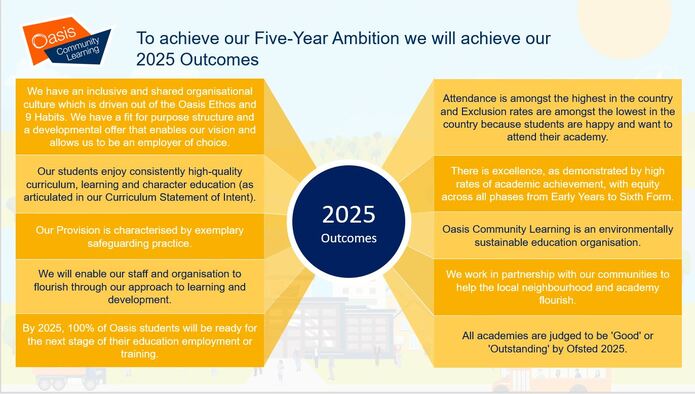 But what does it look like? Oasis have built a team of leaders across every stage as deliberate and intentional foundation blocks that underpin education as the golden ticket. Learning and development are important, but it is also important to think how to deliver the culture and to encourage everyone to be part of the vision for the long-term. Working with the community and believing that children can achieve with support, Oasis supports youth work, food banks and housing to provide a “secure school” to create exceptional education at the heart of the community. Think what you are focusing on. Oasis accepts ALL children and considers what can be done to accommodate ALL children.
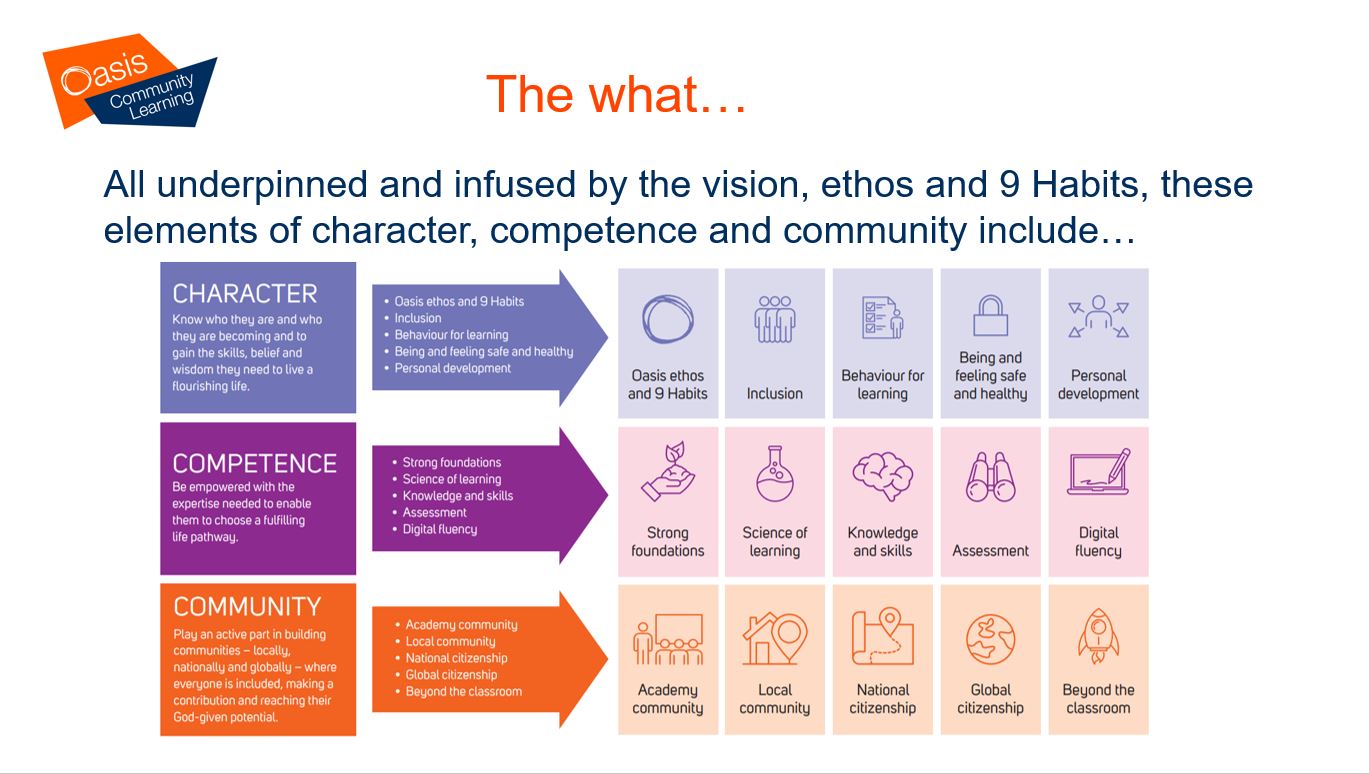
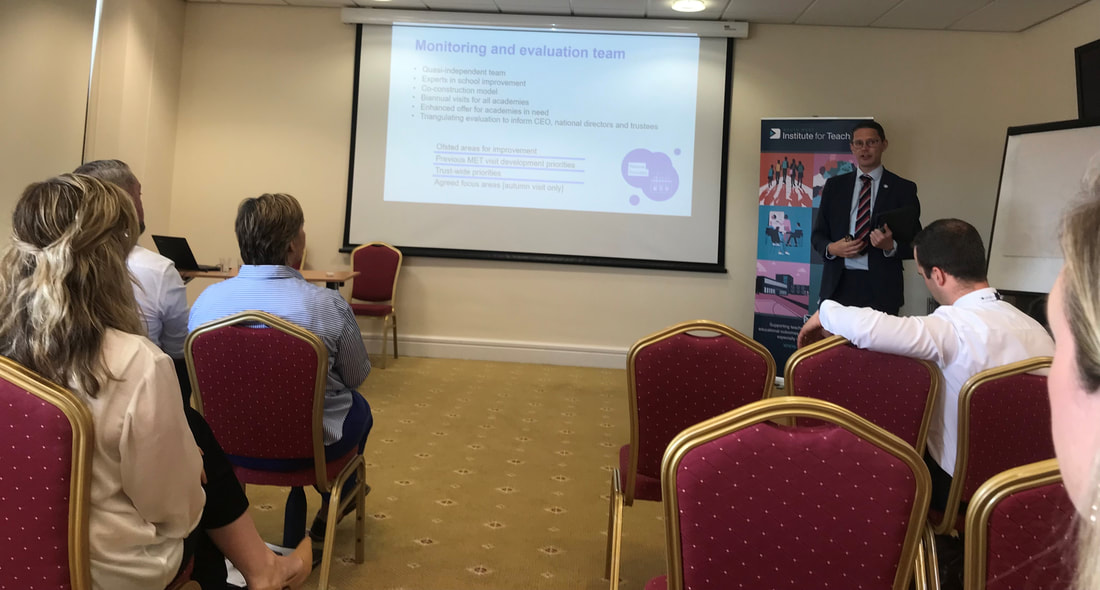
Mindful that 37% of young people go to university every year, Oasis thinks about the other 63% who do not. How is the system geared for them? Too often education is rules focused and our role as educators should be to support the development of children and young people over time. It is important to change and refine priorities – not least with significant other life pressures and the growth in mental health issues. There are families who have generations of non-workers and they need to know what it looks like to work. Sometimes it is a case of doing a few things well. To deliver, celebrate and be proactive. For example, ensuring Headteachers are in lessons with established pillars that free up the teachers. Love the children and understand they are on different journeys. Give them the best opportunities. “The school as an oasis.” John noted the reliance on schools and colleagues post-pandemic and which helped to lead to the development of the National Institute of Teachers with the teacher career development thread throughout the system, underpinned with high quality professional development. Education South West Trust Leader, Matthew Shanks thanked John for the “honest explanation” and reminder about failing, relevant here in the South West and CEO of the Ted Wragg Trust, Moira Marder commended the reminder to love your families. 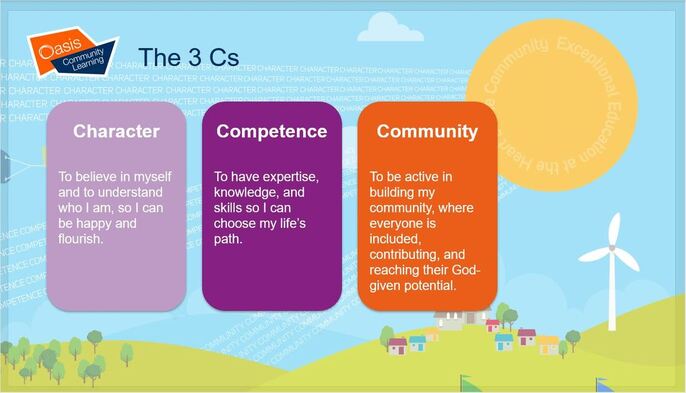 National Director with Oasis Community Learning, Iain Freeland described how Oasis have strengthened and transformed the educational offer. With his specific responsibility for the evaluation and monitoring of Academy performance, Iain leads a team of independent consultants and was previously an Ofsted Inspector. It is important to be honest about what works and what does not work with a focus on Character, Competence and Community. Oasis asks both staff and pupils in order for them to become confident and resilient citizens: Consider who am I and who am I becoming? Staff are encouraged to work collectively and to think of educational provision as collegiate and to focus on priorities and intentional design in the curriculum. Oasis strives to support cultural capital and is part of a global community. Inevitably, Oasis has a high turnover of staff who are expected to be experts, and are always upskilling with an internal assessment of systems with intention, implementation and impact. Find the opportunities to engage staff as a way of retaining staff and create buy-in for the Trust. Evaluation is also an important part of the process.
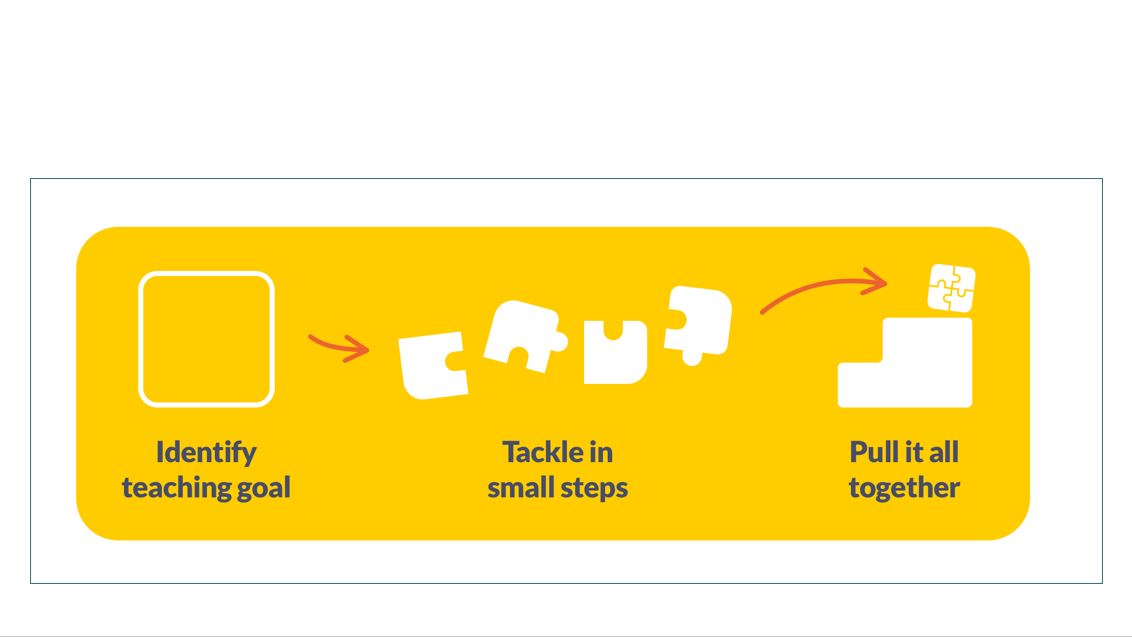
Delegates could attend one of the morning breakout sessions to get closer to some of the other key issues of the day. 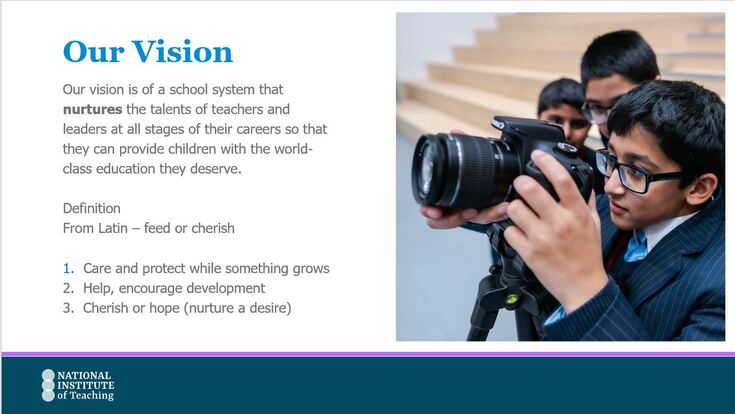 National Institute for Teaching Executive Director of Programmes, Reuben Moore and founding Regional Principal for the South and West, Jenny Sutton presented an update on “The National Institute for Teaching (NIoT) and its role in Developing Education,” reinforcing that “it is here for the system” and to add value. It is essential to change what happens in the classroom as an entitlement that is vital to the system in order to ensure that every child gets the best opportunity and to nurture their talents. Remember the definition of Nurturing = to feed on, to cherish, and to protect. The role of the NIoT is not simply to generate the research, but to make it live and breathe in the classroom and to challenge how to implement the implications of research into practice. There has been too much distance in the past and the NIoT wants to be school-led and to use teachers and leaders’ time well.
In his session on “Reflecting on Parental Engagement,” Early Year Educator, consultant and aspiring children’s author, Jamel Campbell shared his very real love and knowledge of Early Years as a precious time with children based on his professional understanding, but also as a proud father of his 14-months son. Jamel’s talk reminded us of getting the basics right from the beginning in order to stand in good stead for the child’s entire schooling. Remember, there is a connection from the child’s very first day and parental engagement is essential in the child’s healthy development. Parents often have a premeditated judgment of teachers and schools even before they meet due to external influences and negative local neighbourhood information will influence parents, for example about the safety of school. Parental partnerships start from the first point of interaction and the settling in process will benefit from being a collaboration of the setting and parents. 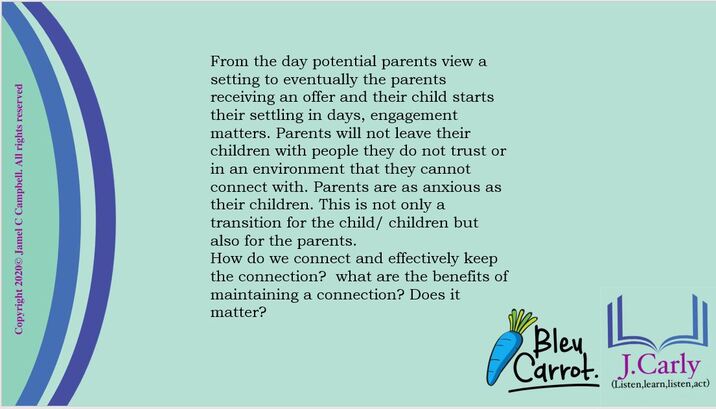 Some parents will be anxious and find it hard to let go and at all stages it will make a difference how parents push, support and influence their child. “Do not blame or judge them for being anxious, but soothe their fears with good practice and empathy.” Consider the parent and child transition and understand that parents are transitioning too. Ensure there is a familiar face for drop-offs and collections and a first point of contact and think about using a buddy system. Know the family and the child. Be aware of family quirks; for example, food, family environment. Consider a key person who is selected by the child. Children are sensory aware which can influence parents. Children connect to people who are like parents to them and this is why diversity is key and gives a sense of security. Feedback and communication are important and needs to be simplistic, authentic and honest, descriptive, authentic and accessible, in a way that parents understand and receive it. Build bonds with parents. Create opportunities, other than around calendar events to involve and engage in purposeful dialogue. When there are times that the teacher has to relay bad news, it is important to balance spending too little or too much time on the issue and to call home beforehand to avoid embarrassing the child. It is important children know that it is not them, but their behaviour that is being addressed. Consider does my setting accommodate all cultures/religions/diversity? Are there resources that represent the wider community? i.e. Devon children visiting London.
Director of The David Ross Education Trust Teaching Hub – A.K.A. “DRET,” Kat Howard, a cousin you might say to our Colyton and Kingsbridge Teaching School Hubs as three of the 87 national Hubs shared her curriculum expertise in her talk on “Leading Principles of Effective Curriculum Development.” There is value in making content explicit to break down barriers for pupils and drawing on the community. For example, inviting local writers into school. By bringing together curriculum content from diverse experiences, the pupils can recognise themselves in the curriculum. Map conversations about the curriculum and remember the significance of teacher expertise and a duty of care towards prospective teachers. Allow a grace period as a mechanism to ensure teachers deliver and understand the purpose of the curriculum with a shared vision and language and direction. There is a significant correlation between teacher purpose and professional fulfilment. The way in which we spend teachers’ and leaders’ time in schools will ultimately determine retention over time. 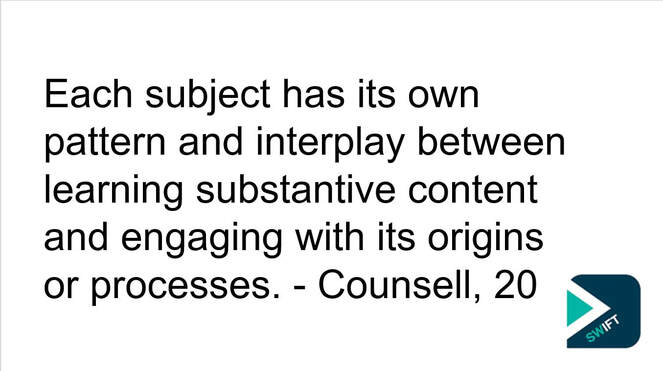 Focus on key reporting points and “look back, look forward” and use a live model so that retrieval becomes part of day-to-day structure of the curriculum with collaborative planning and coaching for discussions. Evaluation needs to be over time and consider who you bring together and the triangulation of data. “The measure of success for our schools is ‘not the exam grades or the progress scores, important though they are, but instead the real meat of what is taught in our schools and colleagues: the curriculum.” (Spielman, 2017)
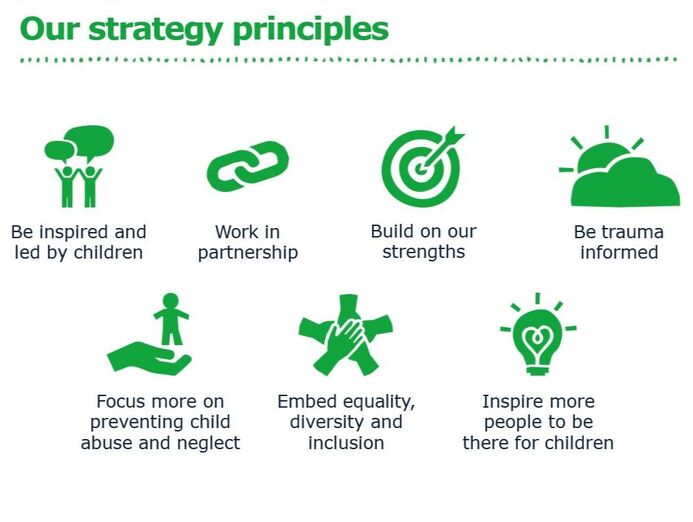
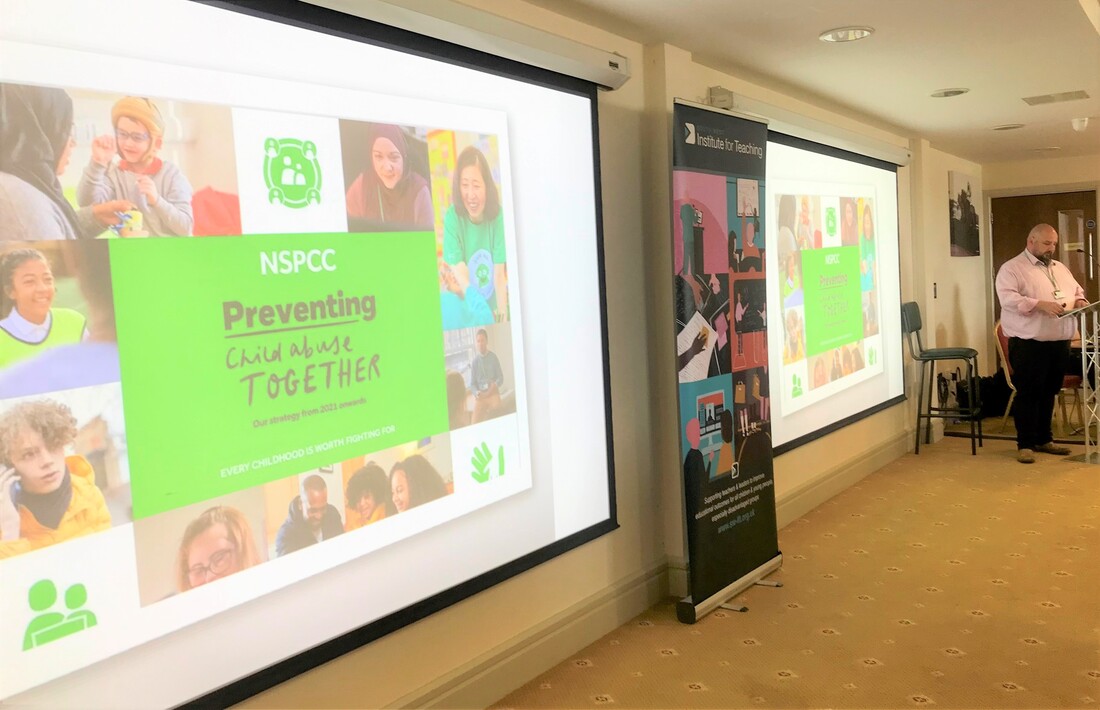
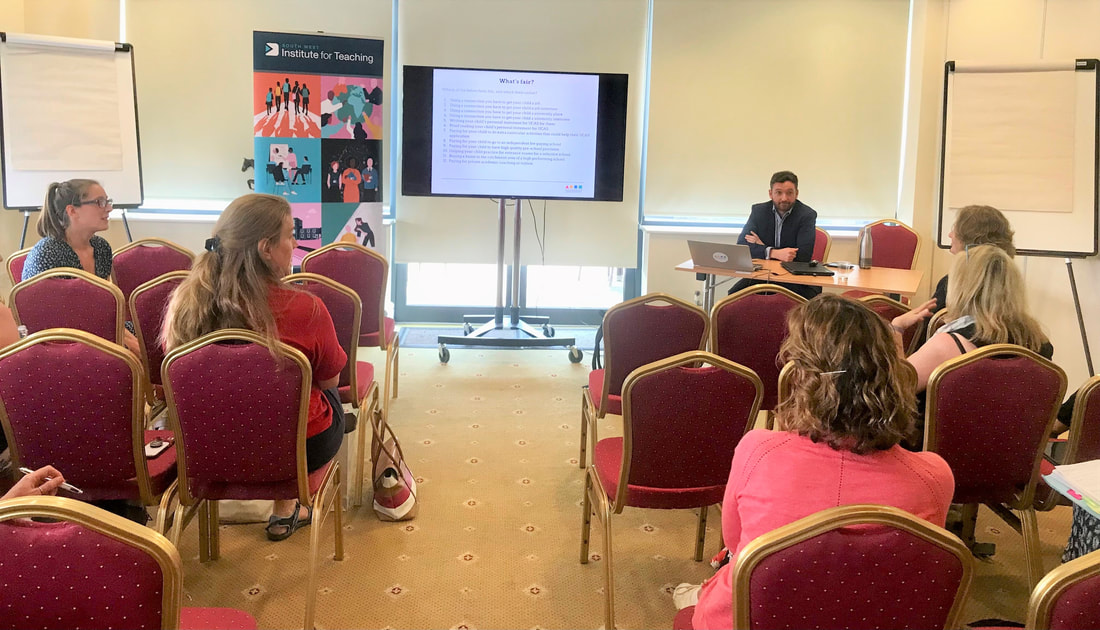
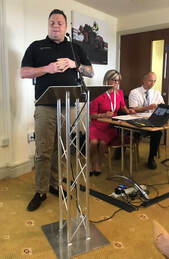
Back together in the main conference hall there was a sense of anticipation about the keynote by Stephen Morgan MP, Shadow Minister for Schools who presented on “Labour’s Vision for Education.” Glad to be back in the South West as a University of Bristol graduate, Stephen recalled his two weeks of work experience in a school – that put him off a career in the classroom. But he keeps close to the world of education as a School Governor and “a firm believer in the power of education to transform lives, create knowledge, skills, relationships and opportunities,” thanking staff for their “incredible work in difficult circumstances” - not least in recent years of the post-pandemic. On visits to schools across the country, Stephen is always impressed by staff ambition and potential, and the dedication of school leaders and teachers who often feel stretched, taken for granted and underpaid. Whilst their dedication is recognised, Labour also understands they cannot run on recognition alone. 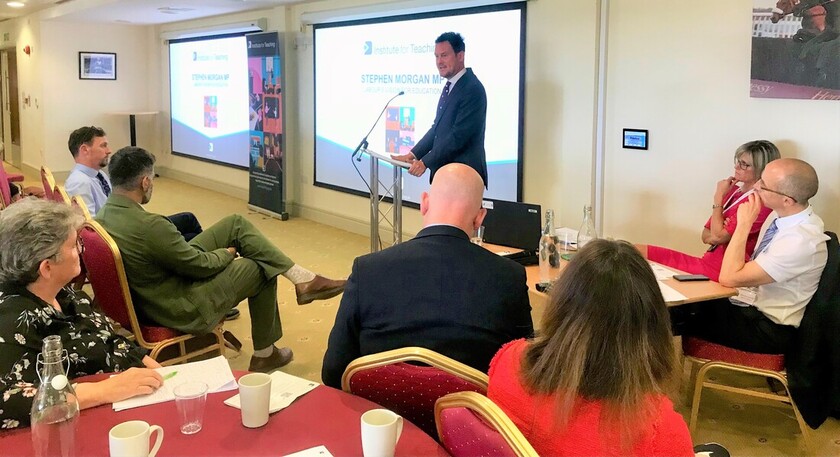 In addition, schools are managing the effects of the cost-of-living crisis and families are struggling with many children hungry and suffering mental health issues. A perfect storm. Added to which the unprecedented teacher recruitment and retention workforce challenge crisis with 2,000 vacant teaching posts a year meaning the Government is missing 40% of its annual recruitment targets, with the entire school population needing to be replaced every 14 years. There may be no silver bullet. But Labour wants excellence for everyone with a few of their active ingredients offered here: A Teaching Assistant in every classroom. Wrap around support by working together. End the private schools tax break. Boost knowledge and skills. Teachers encouraged to take on learning opportunities. Skills to support SEN and EAL. Support programmes for Headteacher to provide local support. Reform Ofsted that is dreaded and makes schools feel underpowered. Leaders and school staff under too much pressure. Greater sector expertise. Increased CAMHs support (“No child should be left without support.”). Commit to Mental Health counsellors in schools. Treat the profession with the respect it deserves. “Not enough young people are leaving school ready for school and life.” Career Advisors in schools. Two weeks’ work experience for all children Education is more than English and Maths. Art, Drama, Music, Sport should all be supported to boost children’s development and to equip them for the 2020s’ world of high technology, and the green economy etc. Echoing 26 years ago Tony Blair’s “education education education” priority for Labour to a rapt audience, Stephen reinforced that Labour is the party of education. 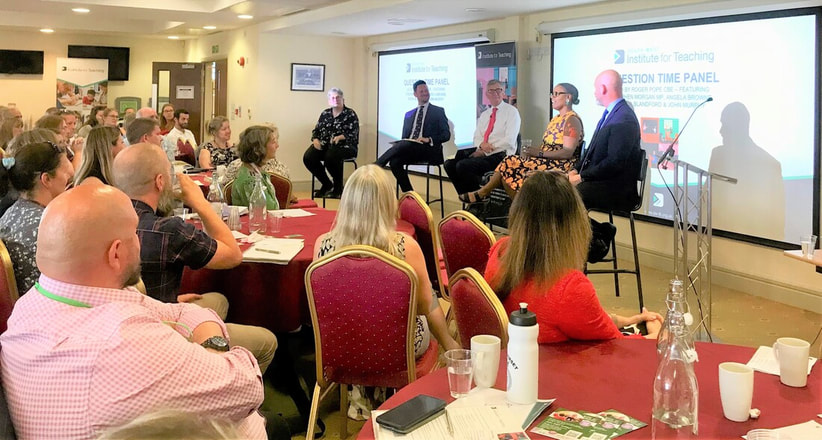 Next up was something new for this year’s conference. The SWIFT Question Time Panel chaired by our very own David Dimbleby, SWIFT Strategic Lead, Roger Pope CBE. Panellists Sonia Blandford, Angela Browne (whom we were to meet as the final keynote in the afternoon), Stephen Morgan MP and John Murphy bravely sat on high chairs at the front of the main conference hall awaiting the wide range of (unseen) questions from delegates. The starter question was aptly, what should be Stephen Morgan’s priority when he enters his new Department for Education office? Baccalaureate with Music for every pupil to support mental wellbeing (Sonia); the levelling up agenda, with a more comprehensive and inclusive education (John); and diversity and the Protected Characteristics to make teaching a profession everyone can access (Angela). Stephen would have top of his own action list to restore trust amongst the profession, the key priorities and to find ways to work with the sector and give teachers the respect they deserve. So, lots for him to be getting on with. The panel next considered their views on all pupils studying Maths in some form to the age of 18 and whether they agreed with Prime Minister Rishi Sunak’s ambition and the main concerns to how it might be rolled out. The panellists generally disagreed. John believed it needed a longer-term strategy and the risk was putting pupils off Maths for life and that other learning gaps need to be closed post-pandemic. Education should seek to create flourishing young people with the choice to do what they want to do. Sonia advocated a love of number and teaching how to apply the knowledge in teaching for life; but also investing in the Early Years. Stephen denounced gimmicky pledges and Angela reflected how education is often too rules bound and institutionalises teachers who should not be treated like infants, comparing the different attitude in the Danish education system (where she lives and the experience of her nine-year-old son). “Create a curiosity based on a genuine passion so that young people find their way to be instructors of their own destiny with faith in the system." The next question referenced the post-pandemic situation in which schools have taken on the role of being 'everything to everyone' - from social work to school nurse. The panellists were invited to consider what they see as the core purpose of schools now and in the future and whether there needs to be a debate about the role of schools in society and how to make this manageable and reasonable for school staff? Sonia would “develop an inclusive education for creative and engaged human beings” who participate and feel included with a sense of belonging. John advocated an education that enables pupils to flourish and reflected on his own personal situation of not feeling good enough from his own schooling. Angela considered the shifting purpose dictated by external partners and recommended improved agencies for those most in need with schools as “a safe harbour” as the continuous thread in children’s lives. Sonia wanted a place in communities for young people for life and work and noted how teachers are having to step in and provide other services. A topical question next about teacher recruitment. The questioner noted their deep concern about the crisis and how this year at their school they have unsuccessfully advertised for a Teacher of Physics twice and had NO applicants. What would the panel suggest is the biggest factor affecting teacher recruitment and retention and how should it be addressed? John advocated the celebration of diversity and belonging to underpin the culture and cited the Oasis Academies conference “Break the Cycle.” As people are the most important part of delivery, Oasis builds staff networks and has a strategic plan where leaders are held to account with action plans. Sonia looked back on her role in co-writing the Teaching Framework 20 years ago as Dean of Canterbury Christ Church College and lamented how the Government is ending the range of teacher training programmes; whereas now is the time to provide a variety of programmes for a variety of people to train and enter the profession. Angela considered attrition rates and the problem of how to retain teachers and ensure that schools are safe places. Stephen shared how the crisis keeps him awake at night with too many teachers leaving the profession and recommended better salaries and better support for teachers (and see the previous highlights from his keynote). Turning to the young people themselves, the next question asked what are the biggest challenges facing children today? Stephen noted the pressures on young people and on CAMHs and schools to support them and advocated the need for a dedicated counsellor in every school and an open access hub in every community. John highlighted the challenges of domestic violence, the cost-of-living and lack of food for some children and families and the need for mental wellbeing support and opportunity for system redesign. Post-pandemic has “laid bare the inequity of the system” and had a huge impact like an elastic band, which has not always flicked back into place with costs to social skills and higher immaturity amongst some children and the need for explicit teaching. It should be about the lived experience for children and not the politicisation. There needs to be even more integrated work. Oasis has food banks in their schools and works to establish stronger bonds with families. Sonia felt that too many children do not feel included or have a sense of belonging and feel like education is something being done to them. They need to be allowed to develop and to be part of a community and the potential of every child should be celebrated. Rather than a punitive educational model. Angela noted the disconnect between adult perceptions and children’s experience. Schools need to be safe places. There is often too much toxic masculinity and children can feel left in a wilderness and on their own. As a fun final question, the panellists were invited to return to their own school days and to remember the teacher who made a lasting impression on them. Angela remembered the teacher who encouraged her to participate in the Ten Tors for three years in a row. The moor was like a transformational, spiritual experience. And as many of us know ourselves, a long walk can be revolutionary. For Sonia, it was the teacher who encouraged her to join the brass band and how she embraced this opportunity. A reminder of the power of inclusiveness and doing something new and doing it well. It was the Year 6 teacher for Stephen who taught his class to aim high and to achieve all their dreams – and whom he saw again as a canvassing MP and she pointed out his spelling mistakes on his leaflet, but had also kept a piece of his work for 30 years. In the midst of his challenging schooling for John, it was the teacher who swore, whom he thought was cool and who listened and praised him for his poem (after firstly asking, “Is this really yours?”!). We thank our panellists for their honest, heartfelt and insightful answers. SWIFT Question Time was a very enjoyable part of the conference experience and showed that educational debate is very much alive and kicking here in the South West. 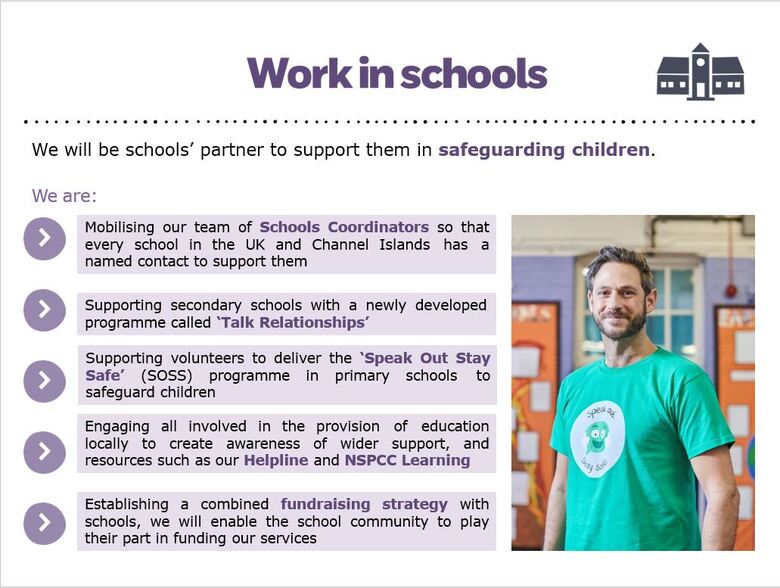 For the afternoon breakout sessions, NPSCC Assistant Director for the Southwest and Channel Islands, Andrew Freeman is currently overseeing the regional delivery of the national 10-year strategy in this 100+ year-old organisation. In his “State of the Nation – being Nationally Significant and Locally Relevant” talk Andrew reiterated the importance of working together in partnership as a nation of safeguarders. The NSPCC’s three impact goals are that everyone plays their part to prevent child abuse, every child is safe online and children feel safe, listened to and supported.
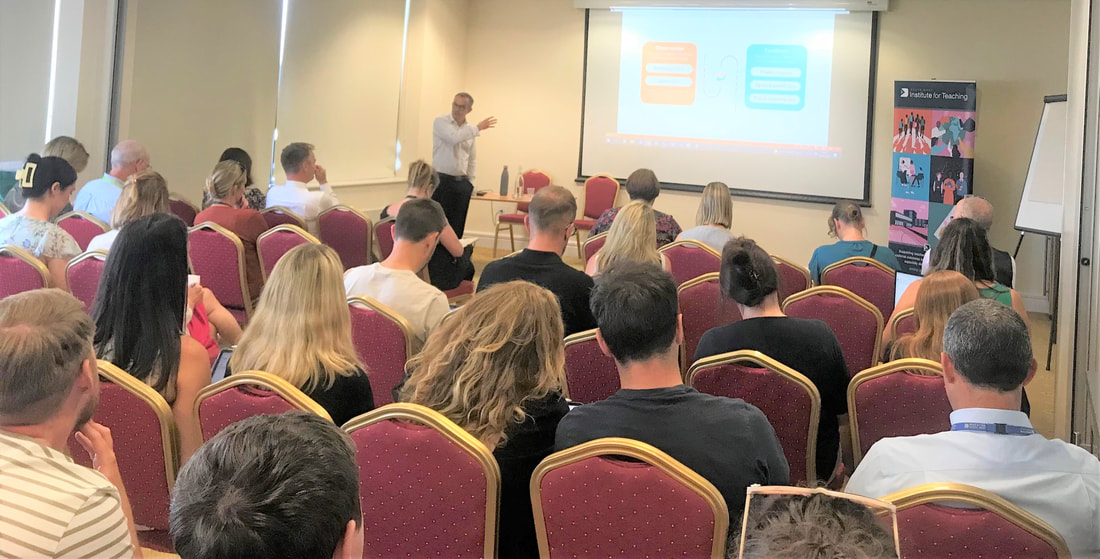
The direct service development is focused on providing children and families what they want and need using the following key principles: involving families, partners and stakeholders in service design so that services deliver positive outcomes that can be replicated; innovating, and not shying away from failure - if the service is not being taken up or not generating positive outcomes for children, to use what we learn and try something else; collecting comprehensive data, evaluating our impact and conducting rigorous trials for the most promising services and forming partnerships with other organisations to implement the services that have been developed and tested to reach more children with the services that are known to work. 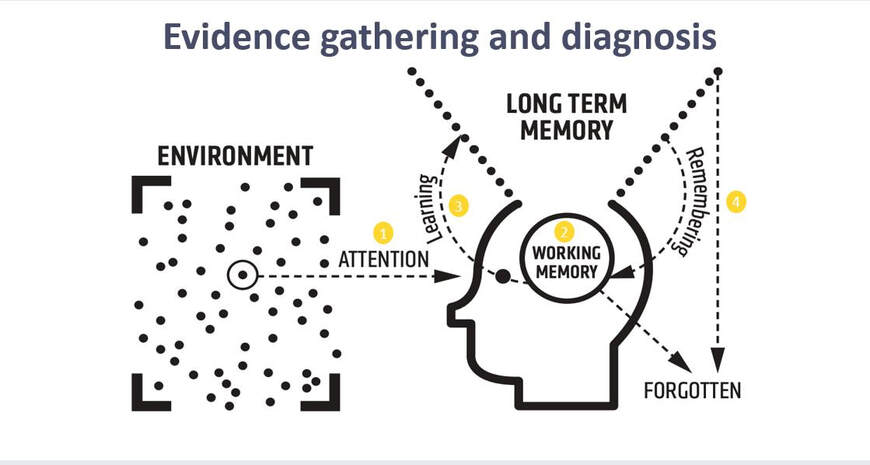 Teacher of English, school leader and MAT CPD lead, Josh Goodrich from StepLab talked about “The Science of Instructional Coaching” and explained the importance of insight, motivation, embedding and techniques and understanding the difference between knowing and doing. Josh shared his own eureka moment after struggling with behaviour management when some simple coaching guided him in a routine for silence, entry routine and scanning that changed everything for him in his first year of teaching.
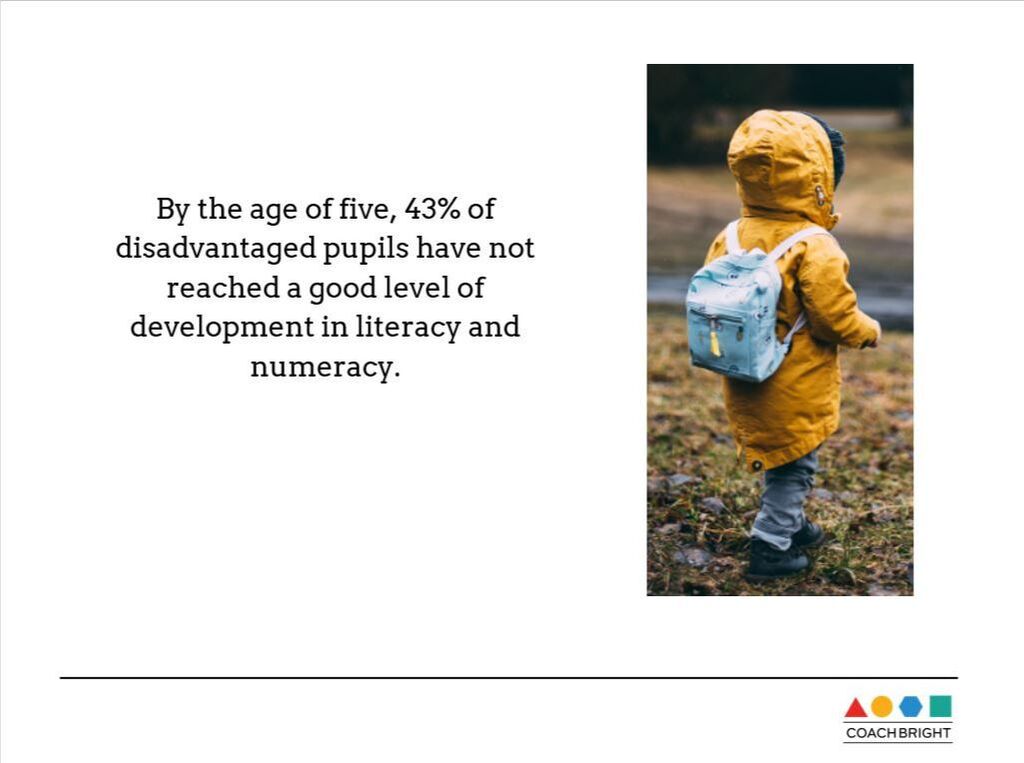
Josh shared a few helpful reminders about learning. We learn by gradually building on (and with) what we know; we attend to what we value; we can only attend to a few things at once; learning by discovery is slow and effortful; repeated practice is necessary for fluency and what we don’t use, we lose. 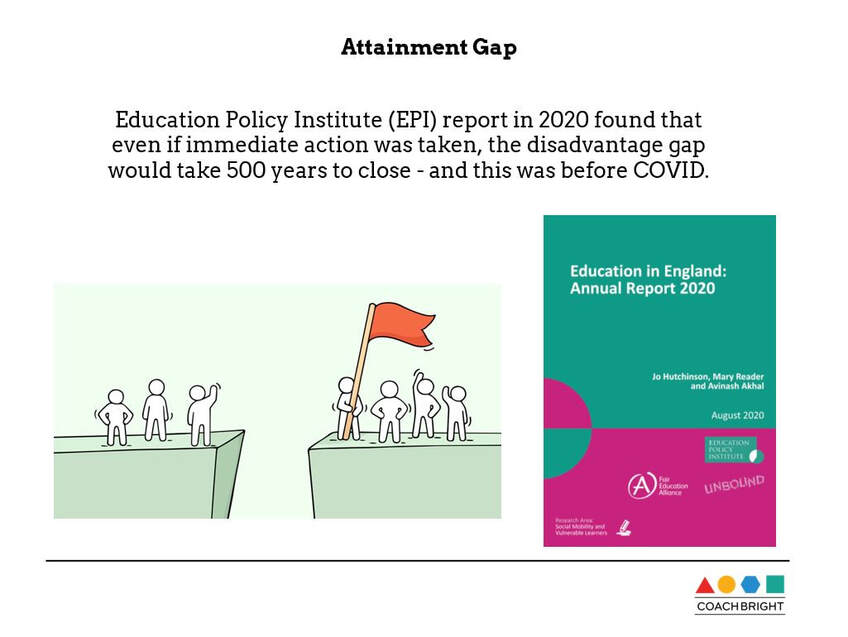 Following on from the earlier keynote by Sonia Blandford, Chief Executive of social mobility charity, CoachBright, Joe McGinn presented on “Academic Coaching as a Vehicle for Social Mobility.” CoachBright provides academic and pastoral coaching for some of the most disadvantaged pupils in the country to become confident, independent, and resilient, and to lead the lives that they wish to lead.
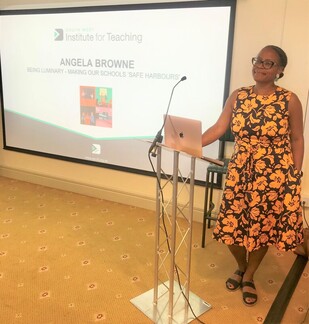
Helpfully, Joe explained some of the different terms that can sometimes be conflated. Absolute/Total Mobility is how much movement there is, i.e. how many people ‘end up’ somewhere different to where they started. The direction is irrelevant; what counts is that they are moving. Upward Mobility is how many people are moving ‘up’ and Relative Mobility is the social fluidity or openness, i.e. how easily people move relative to others. In order to increase the chances of disadvantaged children, we need to decrease the chances of advantaged children in strengthening mechanisms by which disadvantaged children can get ahead, and weaken the mechanisms by which parents protect their children from moving down. SWIFT delivery partner Andy Ogden from Tarka Learning Partnership and Deputy Director, Chris Harris showcased our dynamic Universal Programme of Professional Development Communities, Masterclasses, Forums and Conferences and CPD events and Appropriate Body Service, Early Career Framework, National Professional Qualifications and Teaching School Hub Professional Development Department for Education Golden Thread Programmes (see the presentations at the end of this report). 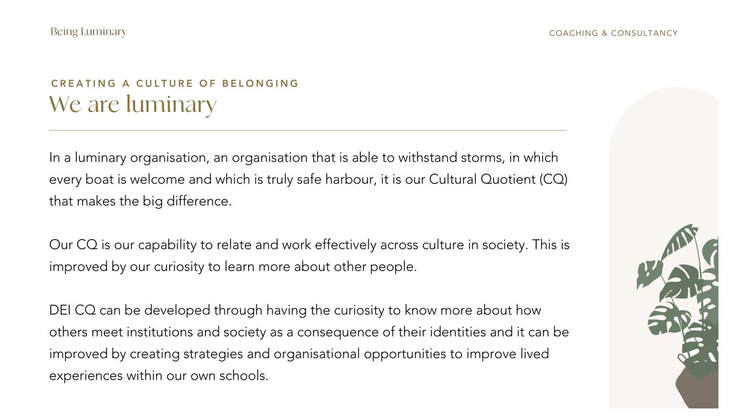 The final keynote, “Being Luminary - Making Our Schools ‘Safe Harbours” by the founder of Being Luminary, supporting leaders with Diversity Equity and Inclusion (DEI), Angela Browne. An interim Deputy CEO in a South West Multi Academy Trust and a Devon girl herself, Angela’s talk was at times heartening and thought-provoking. Declaring school leaders to be “Thought Leaders of DEI” and schools as “a lighthouse to withstand the DEI storms” in the post-George Floyd, #metoo, and Andrew Tate era. Everyone needs to be united on a platform and to engage in a meaningful dialogue with all stakeholders. Reflecting on the Equality Act (2010) and the ten Protected Characteristics that hold identity can be challenging in “heavy weather.” Hate crimes (race, religion, sexual orientation and others) are increasing, especially after the lockdown. It is important to look at the data and always to be aware of the impact of context and to keep up meaningful conversations. Angela cited a case study of Westminster School where more than 250 former pupils wrote an open letter about the toxic culture of racism at the school and bemoaned that their schooling had not prepared them for modern life. Education should strive to prepare all young people to think where they are going.
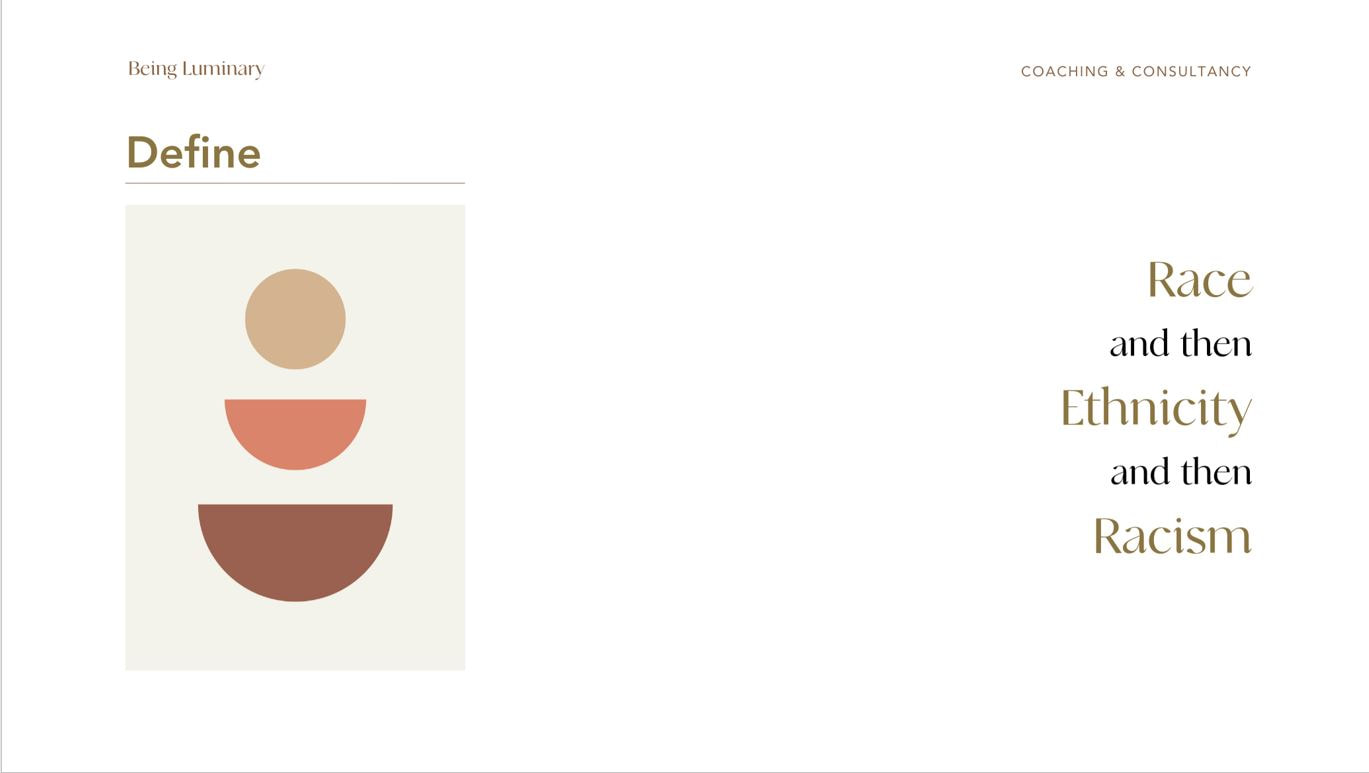
Often a perception gap exists between the tension of what educators think they are doing and what they are really doing. Student voice can become skewed and is not their real voice. Angela refutes the claim that that you do know what you do not know – but insists that you do know as it is part of your peripheral vision. It is important to call out casual racism = microaggressions and to give yourself a line of enquiry. Understand how to create a sense of belonging and she questioned the easy-to-say “great” school narrative as we like to think that we are all having a great experience of school, staff and pupils alike. But this is not always the case. Angela looked at how to reframe the different IQs – emotional and cultural (DEI) and to go beyond policies and procedures and to demonstrate a commitment to learning the vocabulary, concepts and ideas. “What does it feel like to be you?” Change what is inside. In a spine-tingling-across-the-main-conference-hall-moment, on teacher mode, Angela was poised to cold-call the audience to explain their understanding of the definitions of race, ethnicity and racism. Humbly honest delegates admitted their lack of knowledge, how they felt entitled and ignorant and anxious about (possibly) not knowing the answer and their need to learn. In case you were wondering and if you are asked: Race = a biological social construct based on (17th whiteness. Ethnicity = a cultural assignation. A social construct in how to organise people. Racism = the system of advantage. Angela encouraged the audience to “crack open the window of compassion” and to buck the trend in your school. Have the conversations and know your data. “Identity is harboured in our schools.” Ask the question in the community and invite staff to share their lived experiences and to map to other identity groups. Talking and dealing with Diversity Equity and Inclusion should be the same as talking and dealing with safeguarding. 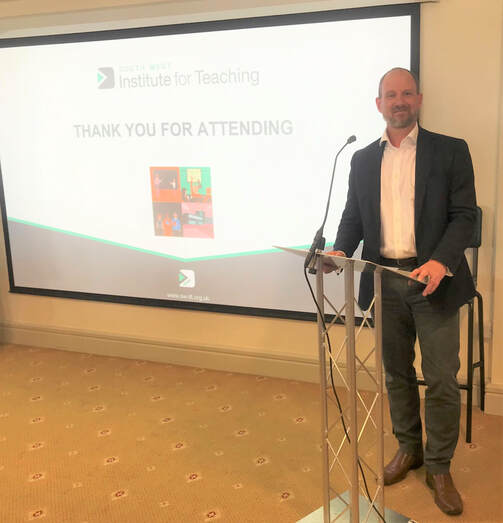 All good things come to an end as Headteacher of Colyton Grammar School, Tim Harris closed the conference. Colyton was the first secondary school to be rated Outstanding under the new Ofsted Framework and may be the only school in England to be consistently rated Outstanding since inspections began and is proud to play a central role in our Teacher School Hub programme delivery. Summing up of the day, Tim thanked everyone involved, as a reminder that together we can make a difference, and noted Colyton is playing its part. “Quality time to think challenge plan and prepare.” In a time of crisis and a Government in perpetual crisis with issues of pay and retaining teachers, there were reasons to be hopeful. Schools are well placed to create a sense of belonging and to consider children’s experiences from all perspectives, quoting Atticus Finch in Harper Lee’s “To Kill a Mockingbird:” “You never really understand a person until you consider things from his point of view— until you climb in his skin and walk around in it.” But how do schools know when they are successful? By being clear about what it really means and the end purpose and working together as the collaboration of teachers to make a difference. All teachers have specific skills sets and can share this expertise and have integrity to pursue brilliant outcomes for all. Schools can foster diverse communities where everyone belongs as Archbishop Tutu said: “I am a human because I belong.” As educators we need to challenge perceptions. The South West might have the largest disadvantaged rates in the country with the lowest percentage of young people going to university - “the forgotten region.” But Stephen Morgan has shown that he is keen to listen to school leaders and we need people to listen. Things are and will get better. Schools are striving to provide a world class education that children and young people deserve and with wonderful professional development on offer from SWIFT there is the opportunity to be more effective and to make a difference. Tim praised SWIFT Deputy Director, Chris Harris for his last SWIFT conference before he moves to his new post and thanked him for all his hard work and leadership. Finally, thank YOU for YOUR support. As the inspiring Nelson Mandela said: “It always seems impossible until it’s done.”
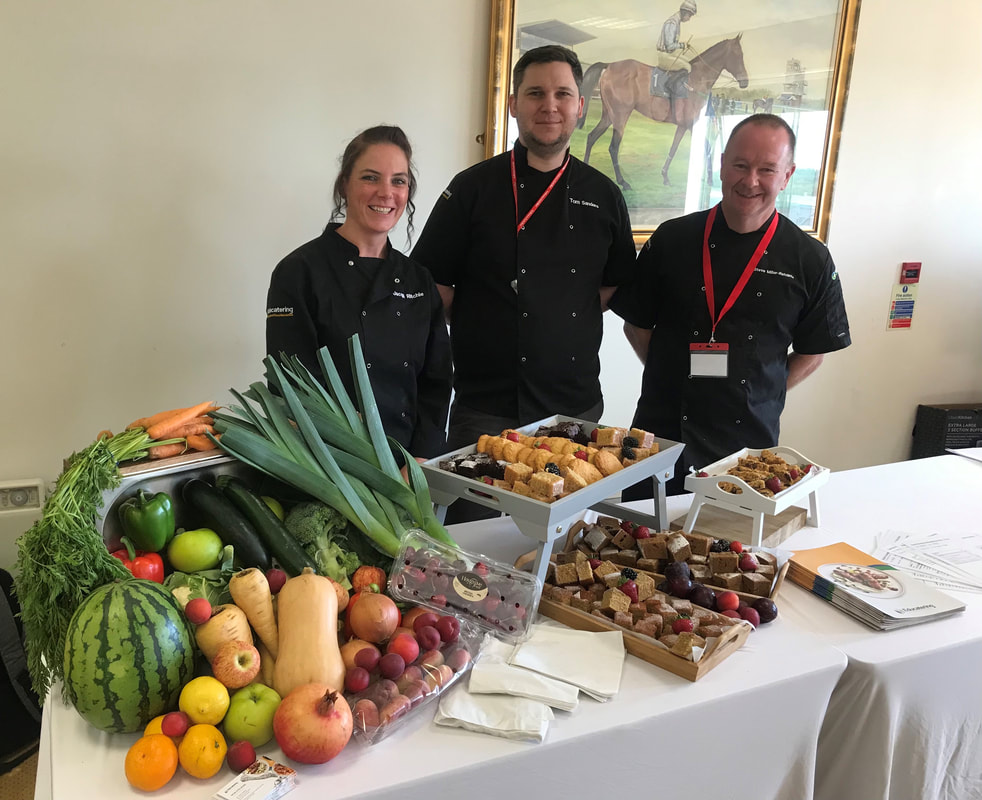
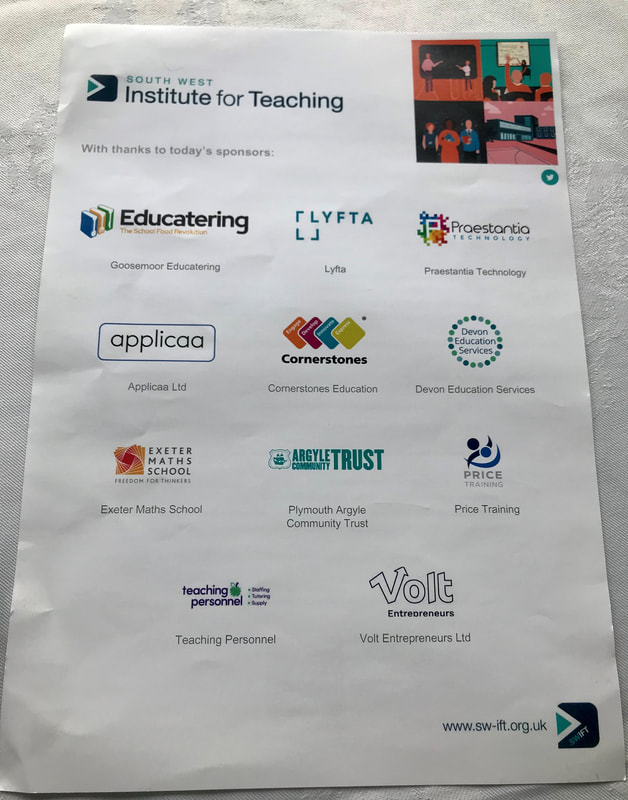
The 2023 Summer Conference was a memorable time together with a purposeful and positive atmosphere. An optimistic collective call to action to create a sense of belonging and support in our school communities, to provide an education in which children and young people can flourish, working together and for schools to be lighthouses to withstand the Diversity, Equity and Inclusion storms. As well as time to network, it was an occasion to meet our sponsors and exhibitors. We are grateful to all our sponsors who help us to fund a range of high-profile and high-quality professional development presenters; whilst bringing another dimension with their practical and relevant products and services to support teachers, leaders and schools. Rhys Gwillym introduced Praestantia Technology who provide IT technology and audio-visual solutions and consultancy with excellence and simplicity exclusively for educational settings so that, schools and MATs can focus on providing an outstanding learning environment. With their own links to education, Praestantia provide SIMS support, Broadband and Online Safety guidance, IT Security and school servers and backup. Consider them a hands-on IT safety net. For those in the audience who had yet to be captivated by award-winning Lyfta’s photography, Rahul Karavadra took us on a brief tour of their topical, enlightening and compassionate storyworlds that reach out across the world to enter the classroom and share different cultures and perspectives. Lyfta helps teachers to nurture the global citizens of tomorrow. You can watch their intro video here Family-run school catering experts with over 60 years’ experience, Educatering, were at the chef’s table providing food demos of their delicious food cooked using local ingredients, and mindful of healthy, nourishing and good value food grown close to home within our region. Delegates enjoyed tasting their tasty food throughout the day and finding out more about how Educatering can support school catering with bespoke menus.
We thank the other exhibitors for being with us and for brightening the day with their innovative and useful educational products and services: Applicaa Ltd, Cornerstones Education, Devon Education Services, Exeter Maths School, Plymouth Argyle Community Trust, PRICE Training Teaching Personnel and Volt Entrepreneurs Ltd (you can find their website links at the end of this report) and with grateful thanks to Conferences South West for organising and overseeing. Thinking green this year, our SWIFT team stood tall with a lower carbon footprint conference: reduced plastic and paper and delegates using the QR code on the conference programme for more information. Once again, we thank EVERYONE involved in this year's Summer Conference: our speakers, sponsors and exhibitors, and of course, our delegates. Report by Jude Owens, PA to the SWIFT Executive Team Find out more about sponsors and exhibitors here:
0 Comments
23/6/2023 0 Comments SWIFT Events Newsletter | Issue 27 This issue includes a featured article and some highlighted programmes, courses and events. from our partners to support your professional development and enhance the work of your school. Simply click on the booking link, to the course or event you are interested in, to get more details or book straight on!
|




 |  |
our speakers, sponsors and exhibitors, and of course, our delegates.
In the midst of the post-pandemic lockdown aftermath, the teacher recruitment and retention crisis, the cost of living crisis and other pressures on young people today, the conference was memorable time together - with the popular addition of our new "Question Time" feature, showing that educational debate is very much alive and kicking here in the South West.
With a purposeful and positive atmosphere the conference was an optimistic collective call to action to create a sense of belonging and support in our school communities, to provide an education in which children and young people can flourish, to work together and for schools to be lighthouses to withstand the Diversity, Equity and Inclusion storms.
Things are and will get better.
As Nelson Mandela said: “It always seems impossible until it’s done.”
But in the meantime, you can check out some of the highlights on Twitter.
By Jude Owens, PA to the SWIFT Executive Team
Event information
This is an opportunity to gain classroom experience and find out more about SWIFT Teacher Training courses and PGCE, and our route into teaching.
These events are based in one of our partner schools where you will be looked after by an experienced Campus Lead, who will be your host for the morning.
Activities could include:
· a guided training walk with the campus lead
· introduction to observing lessons and different styles of teaching
· seeing how specific subjects are taught
· engaging in learning conversations with colleagues
· learning more about the SWIFT Teacher Training programme
· questions and Next Steps
Who
Educated to degree level; recent Graduates, career changers, returners to work; Teaching Assistants, and anyone interested in teaching.
Times and venues, across five campus locations
SWIFT Teacher Training offer primary and secondary routes in all of our campus areas. However, for the purpose of this event each campus is hosting a single phase classroom experience and information session.
Primary
SWIFT Teacher Training | North Devon Campus | Orchard Vale Primary School | Wednesday 12 July 2023 | 0930 – 1400 (Time TBC)
SWIFT Teacher Training | Plymouth Area Campus | Tor Bridge Primary School | Monday 17 July 2023 | 0930 – 1400
Secondary
SWIFT Teacher Training | East Devon and Dorset Campus | Colyton Grammar School | Friday 7 July 2023 | 0900 - 1245
SWIFT Teacher Training | Mid Devon and Somerset Campus | Uffculme Academy | Friday 7 July 2023 | 0900 - 1400
Primary and Secondary Online
We will also be hosting an online information session, if you are unable to attend one of our in-person events. This can still include classroom experience; but we will be able to arrange this for a time to suit you at a later date.
SWIFT Teacher Training | Online information event
Tuesday 11 July 2023 | 1000 – 1045
Tuesday 11 July 2023 | 1800 - 1845
Please note our SWIFT Teacher Training website will be available week beginning Monday 26 June 2023.
To book:
On-line booking form HERE
Or contact: Nicky Sheppard / Sarah Frame
Email | nicky.sheppard@sw-ift.org.uk / sarah.frame@sw-ift.org.uk
Phone | 01548 852641 Ext 2592
PLEASE BOOK BY Wednesday 5 July 2023

“So, we must work hard to create the rituals that create belonging. How we celebrate key transition points and rites of passage as children grow through the school.”
Read about the Early Career Framework Extra! CPD session on Inclusive Practice in all Classrooms with Professor Sonia Blandford and Wendy Casson MBE. If you need any encouragement about Courageous Conversations, you can get some insights with our Diversity, Equity and Inclusion training session with Diverse Educators.
CEO of Riviera Education Trust Stewart Biddles is this issue’s interviewee commending the value of partnership; which, of course we echo.
Find out more about the Phase 1 findings of the independent review of teachers’ professional development by Ofsted (commissioned by the Department for Education) and sign-up the Education Endowment Foundation Early Talk Boost Project.
We celebrate Cultural Diversity beyond the classroom with our sponsor Lyfta and keep up-to-date with other sponsors, Educatering and SchoolPro TLC and book your place at Praestantia Technology’s Microsoft event two weeks today.
That is why we were delighted to see the impact of the live lessons delivered by our sponsor Lyfta in celebration of World Day for Cultural Diversity.

During the live lesson, students delved into themes linked to British values, with a particular focus on mutual respect and understanding and celebrated the rich diversity of British society, whilst reflecting on the significance of experiencing different people and places.
Lyfta’s in-house teacher Noel started the lessons with some discussion about London, the backdrop of the Keep London Smiling storyworld. Did you know that London is home to around 10 million people, with an astounding 250+ different languages spoken? This fascinating glimpse into London's diversity set the stage for students to share their knowledge of the city and its special places. Students were asked what they knew about the city and its landmarks - some of their responses are shown below:

This inspiring film sparked profound reflections amongst the students, who highlighted the universal power of kindness and compassion:
“A smile costs nothing and it speaks every language”
“His level of kindness is something we could all replicate”
“No matter where you are you can be kind”
What made these lessons even more impactful, given the theme of diversity in the UK, was the participation of students from across the country and beyond. We heard from students from schools in Cardiff, Portsmouth, Canterbury, Newcastle, and Bletchley Park - as well as from Murcia in Spain.
It was wonderful how students shared insights about their local communities, unique landmarks, and the diverse cultures that make their communities special. We heard about La Manga beach in Murcia, the historic dockyard in Portsmouth, the Haribo factory in Pontefract and the sense of community in Doncaster.
Lyfta live lessons have been delivered to a total of 1,500 classes in the last 12 months (some 45,000 student sessions). These live lessons, delivered Lyfta’s resident teacher via Zoom, bring together schools from different regions for a shared Lyfta experience. No preparation is required, teachers can just sign up and join via a link on the day.
There are more Lyfta Live lessons in the coming weeks.
Sign up below to be notified for the next dates.
Lyfta are also exhibiting at the SWIFT Summer Conference on Thursday 15 June 2023.
So, if you are attending, be sure to speak with the team there!
Report by Penny Othen, Director of Marketing at Lyfta

This was the second session in the SWIFT ECF Extra series led by Professor Sonia Blandford and Wendy Casson MBE with the objective of exploring the meaning of inclusion in educational policy and practice with practical strategies to develop inclusion in classrooms.
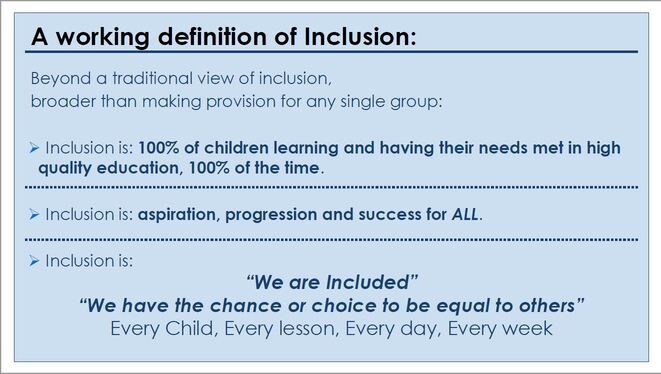
The following provides a summary of their views and insights on the theme of inclusion.
As teachers, it is important always to have high expectations of all children.
Part of this is positive relationships across all the dynamics between pupils, parents and teachers in order to get the connection to help them move forward.
Be curious.
Think as a teacher, is there something I could do differently?
Why is the pupil struggling? Are they distracted? Have they got other issues? Consider a trauma-informed approach.
What could you do to support them? Children learn differently.
Look at other practice near and next to you.
Consider external factors out of your control: lesson disruptions, what happened last night, family dynamics, the previous lesson, significantly, the weather and the child’s health that particular day.
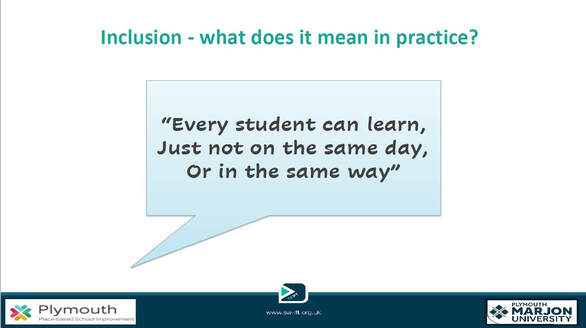
In practice, “inclusion is the action or state of including or being included within a group or structure. In a school or education setting, it means that every child and every adult who works or learns in a school is valued and whose personal needs are being met.”
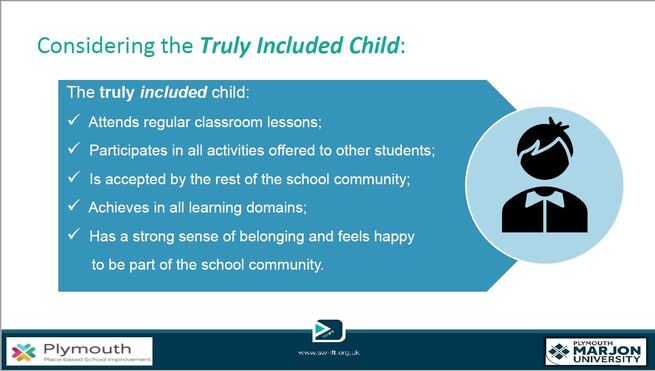
- Aspiration (I can)
- Access (I do)
- Ability to demonstrate attainment (I have)
- Achievement (I am)
Inclusion fosters a sense of belonging for everyone - both pupils and teachers.
Good schools who deliver inclusive practice value every member of the school community and help parents and carers to be the best parent they can be.
Sometimes we kick against being led. But when led effectively, it brings belonging and purpose.
Make time to talk and listen to colleagues and to share knowledge and practice.
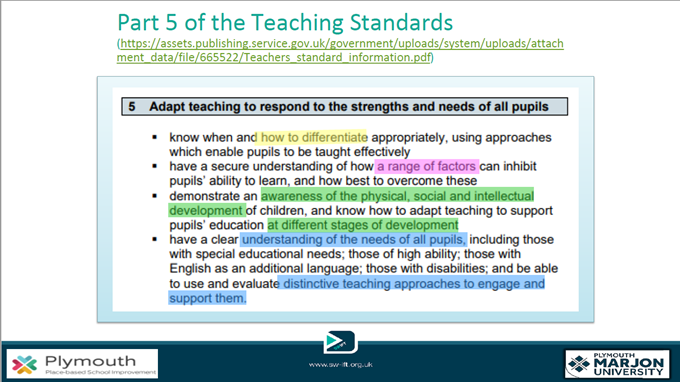
The inclusive classroom should not teach to satisfy Ofsted or to meet the Teacher’s Standards, but teach to meet the needs of the pupils. Allow the pupils to guide you.
Keep reinventing yourself, push to do different things.
When a lesson does not go well reflect on the effectiveness of your lessons and approaches to teaching and try something different.
Embrace the trips and slips!
System leadership should work across the Year Group, Key Stage and/or whole school as a shared vision and a commitment to each other for collaboration and improved communication with school leaders and teachers.
Consider the foundations of:
- Equality, Diversity, and Inclusion
- Mutuality and Moral Purpose
- Meritocracy vs Cultural Foundations, Values, and History
- Multiplicity of destinations needs a multiplicity of routes
- Not Just ‘Getting In, But Staying In’…
Meritocracy has been around for 45 years and has been shown not to work on the premise that those that can will succeed and those who cannot fail. This is not where we want to be in education and we must foster values that include everyone. All children and young people should feel part of what is happening in school. Regrettably, the National Curriculum does not always support inclusion with its one size fits all approach.
SEN and disability should not be a barrier to inclusion.
Sonia noted that over the last 20 years, educators and parents have all become more aware, but have attached too many labels to too many children. Whereas, we should be more inclusive and integrate children despite their background, challenge or needs. Similarly, Multi-agency teams: SENDCO, SLCN, Ed Psych, CAMHS, Mental Health Practitioners, Social Care and Looked After Teams need to work together more effectively as they are rarely effective
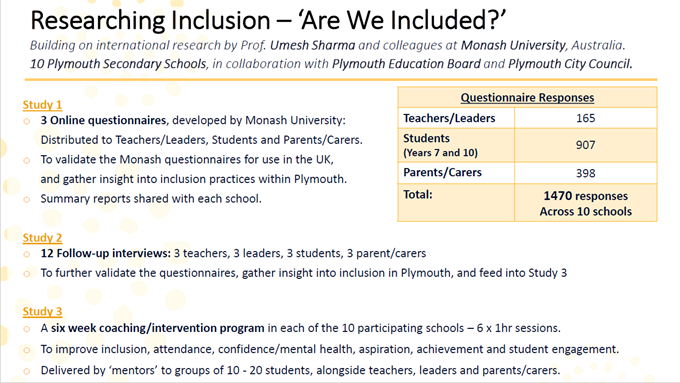
The research found that teachers and Leaders listed the following barriers that currently hinder inclusion in their classroom:
- Lack of Teaching Assistant support
- Behaviour of other students
- Lack of communication/limited information on child’s needs
- Lack of/late EHCP
- Lack of flexibility in curriculum/lack of differentiation
- Limited time to plan/prepare resources
- Mixed abilities in the classroom/Limited time in lesson
- Limited understanding of SEND/Lack of training
- Lack of clear strategies
- Staff attitude lack of aspiration for students
- Lack of equipment and resources
Teachers can however take the following steps to support inclusion:
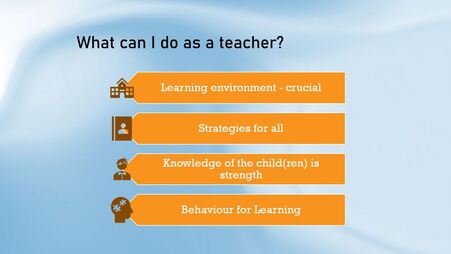
- Learning Environment – avoid sensory overload and consider the influence of softer colours, lighting and environment.
- Strategies for all – showcase and celebrate examples of every learner’s work on the classroom walls.
- Knowledge of the child - what makes them sad, happy, think and encourage them to be creative.
- Behaviour for learning - if the teaching is right the behaviour will be right. Role model. Teachers cannot force students to behave. Be in control of yourself as a teacher, not the child. Let them be themselves. Think what else can be done differently and respond differently. Inclusion leads to improved behaviour and is the catalyst for positive discussions.
- Awareness of adaptive and responsive teaching - slow down and give one message at a time to allow processing.
- Encourage creativity.
- Be aware of language levels.
- Less is more - talking, instruction, stimulus - give one message at a time to allow processing.
- Pace, tone and pitch.
- Recap and refresh learning.
- Targeted use of questions - consider Development Psychologist Marion Blank’s Four Blank Levels of Questioning.
- Encourage individual reflection.
- Red, amber, green – use coloured trays in which pupils can discreetly put their workbooks to show their level of understanding.
Children feel cared for when teachers know their name and know things about them.
Know your students’ strengths and areas for development (do not say weaknesses!) and find the balance.
Remember to confront without confrontation.
Take the problem away, for example, children who arrive in school without a pen to write with. Some of whom are ready to battle with the teacher and waste time in the lesson.
Simply, provide a pen for them (and be ready for the serial offenders) so that there is no challenge and disruption to the lesson.
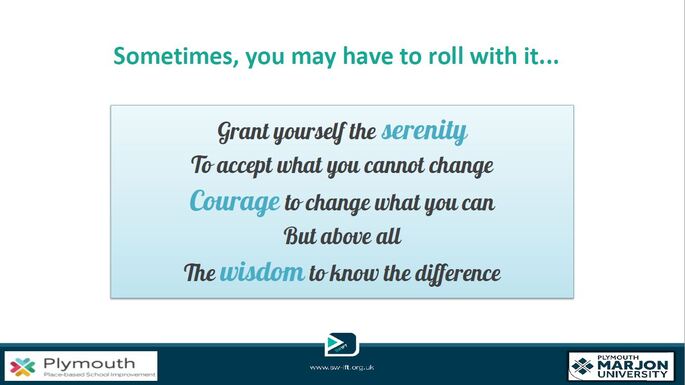
Seek to understand their emotional wellbeing.
It is often the things that you do not see that can make the difference.
But remember the high-performing child. They might be good in your lesson. But stretch them further with targeted work.
To conclude, successful inclusion has a shared vision as a core set of values and beliefs shared by all staff, with a commitment to creating an ethos and culture of achievement across the whole school with positive collaboration with parents, children and young people and others within and beyond the school, including other schools, in order to develop and share best practice. Good communication throughout this process encourages modelling positive engagement with all stakeholders.
We thank Sonia and Wendy for this uplifting can-do presentation on Inclusive Practice in all Classrooms that makes sense in order to support positive outcomes for all children and young people.
The final session in this three-part series takes place online on Thursday 6 July 2023 at 1600 and will focus on Parent and Carer Engagement to Improve Student Outcomes (register on the link below).
Report by Jude Owens, PA to the SWIFT Executive Team
More than a catchy course title, this training session part of our on-going Diversity, Equity and Inclusion work with Diverse Educators was set to be a life-affirming session for the SWIFT Central Team and Delivery Partnership Group.
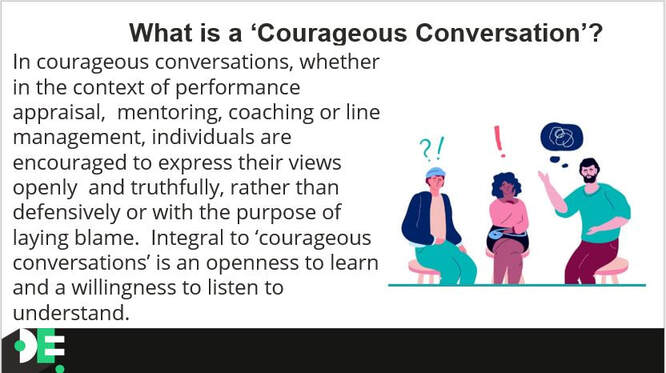
Typical examples of Courageous Conversations include handling conflict, confronting a colleague, expressing an unpopular idea on a team, asking for a favour, saying no to a request for a favour, asking for a raise, or trying to have a conversation with someone who is avoiding you. Research shows that in particular, many women find such ‘courageous conversations’ to be challenging. Think of the language that betrays who can “get away” with certain behaviours. Men are labelled the boss and women as bossy. These mindsets are reflected in the workplace and how women have been conditioned.
Too often, the premise of courageous conversations is associated with conflict, fills us with dread and we descend into a defensive, blame culture that magnifies the existing tension and struggle and becomes a negative scenario. Whereas we need to act in a neutral, open way, without bias and to show a willingness and openness to learn.
The fear zone of hurting someone risks inhibiting us and we can worry more about having the courageous conversation than the act of doing it. We waste energy attempting to mind-read what people are thinking and feeling that boxes us in.
Know your strengths and what you bring and learn to control yourself.

No-one shies away from safeguarding conversations. It should be the same for a courageous conversation that whilst often difficult and necessary, when done effectively, it can have a dramatic impact on how we lead ourselves, the team and/or the organisation.
It can be difficult to find a time to talk in a busy school and it is important to book in time and to reframe as part of the workplace culture that builds positive psychology and a collective commitment.
But for many of us, we have to step out of our comfort zone to discuss a topic that can be emotionally charged and we fear an emotional response. Whilst we might seek to avoid such conversations, they can help to build an inclusive workplace and push through to the learning zone to learn about ourselves, our team and the wider culture and ultimately, to ensure growth.
See Matthew Syed’s book, “Rebel Ideas” that asks if we are open to ideas and the importance of learning how to reframe and negotiate. For example, in asking for flexible working, or a salary raise.
We need to build our confidence to build our competences as strategic intent and a framework of training.
The ideal reset opportunity is in September at the start of a new term, building in “contracting” for courageous conversations at a neutral and unemotional safe point.
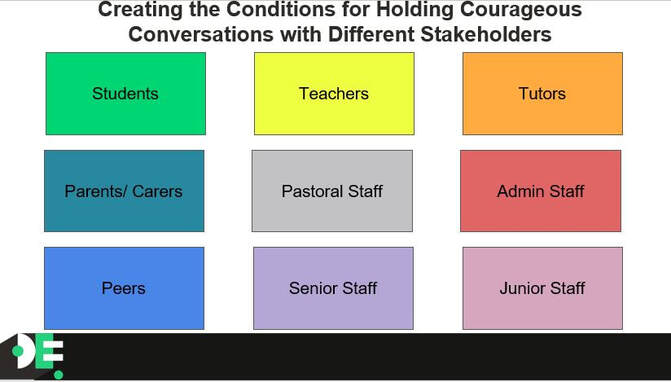
All staff should be trained. Not only the dominant, senior and more confident members of staff.
Experience shows when all staff are trained, the best response is from operational staff who have never had a voice in the school. Sub cultures across an organisation need careful navigation.
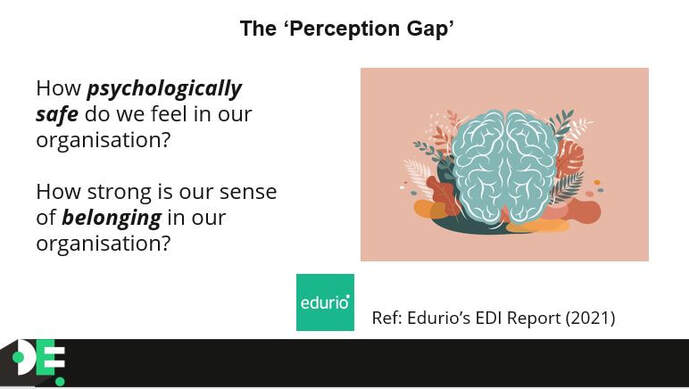
By building psychological safety in a school, all staff will have the courage to speak out and share how it will be received and processed with positive intent. Practically, this means creating a subtle and private space, especially in an open office and equally on the telephone. Tell the other person that you are in a confidential space to show mutual respect.
There are many advantages of psychological safety (door open policy). Staff feel valued, and are more productive and creative with higher wellbeing, thriving and a feeling of belonging, leading to better staff retention. Energy is conserved as there is an agreed way of talking and less frustration, with more flexible working that is very positively mirrored in the classroom.
The negatives of psychological safety (doors shut) are damaging to an organisation. It can result in high absence; staff have a limited sense of purpose and connection and disengagement of staff.

Essentially, understand that we have the responsibility to raise the courageous conversations if an issue or something has happened. Pre-empt. But be aware that one conversation is not the same for everyone.
Make the time for the conversation. Be intentional and think through and reiterate the key points. Listen actively and hear through it and do not take it personally and strive to be objective.
“When you said this, it made me feel like this…” and join up the dots in the conversations.
Part of the problem is letting someone behave badly.
But if you have a courageous conversation, you can do it in a caring way, “I care about you so I am going to challenge you…” and this can disarm people in a positive way.
Think how we modify ourselves to other people and our relationships and the use of language.
This modifies from the early phase of a professional relationship in the opening interactions and evolves over time when you have a positive track record. Use a buddy as a sounding board. Then, if difficult situations arise you can leverage the relationship capital from your authenticity, credibility and integrity.
Move from impulsion to intentional.
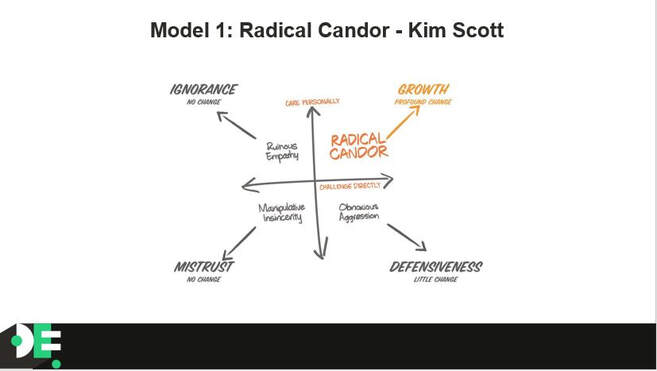
“Get curious rather than critical.”
Part of coaching, reframe questions to how or what – not why.
Meet in the middle and learn from it and learn some awareness from each other and tackle the challenge, contracting how to move forward.
“It’s the conversations that we don’t have, that cause the biggest problems.”
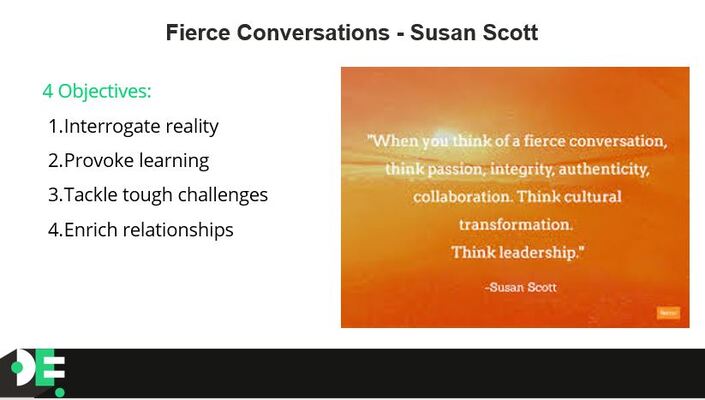
The key principles of fierce conversations are:
- Master the courage to interrogate reality (truth and courage)
- Come out from behind yourself, into the conversation, and make it real (authenticity)
- Be here, prepared and nowhere else (presence)
- Tackle your toughest challenge today (intention and action)
- Obey your instincts (intuition)
- Take responsibility for your emotional wake (personal responsibility)
- Let silence do the heavy lifting (mindfulness)
If you are good at regulating your emotions you can guide the other person to stay regulated too.
Preparation before the courageous conversation is essential to anticipate how they might respond.
For example, lesson observation feedback in the person's classroom. If it is good or bad, they will be in their own space.
Use emotional intelligence of how and where they are sat in the classroom.
Or book a phone call later to suit you both and use an out of office sign, and phones and emails off so that you can give your full attention.
“The conversation is the relationship.”
There can be a mismatch and an unhealthy dissonance culture between what they say and what they do and bad situations can fester.
Learn also how to manage the emotional wake and the emotional wake of others.
Useful sentence starters can allow time to process.
“Am I hearing you correctly to reclarify?”
“Can you tell me more..”
“What I hear you saying is..”
Remember the power of the pause and encouraging comments and always regulate yourself as how you respond will dictate how they respond.
Do not hijack their story or interrupt. Do not play one-upmanship and minimise the difference or discount and explain away. Do not get defensive or take it personally or try to validate assumptions.
Remember also, self-reflection after the conversation about what went well.
A strong strategy is to build opportunities and routines into the way we work. For example, a mid-year appraisal and create an expectation as the norm.
As deliberate practice courageous conversations can become the Code of Conduct and working proactively helps to make the workplace a psychologically safe place to work.
“We make the weather in our own environment.”
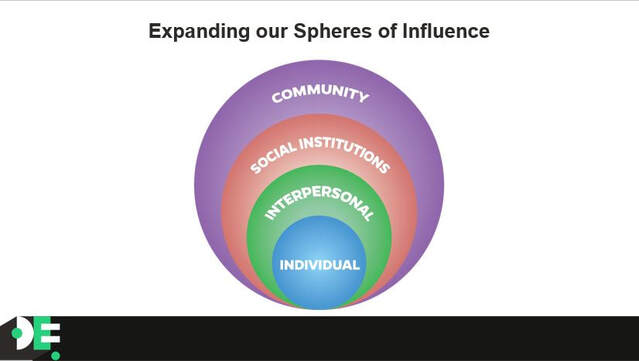
Fierce conversation = to resolve something. Not all the time. Reactive to challenge something specific.
We thank Diverse Educators lead, Hannah Wilson for guiding us through this empowering session on Courageous Conversations and reminding us of the value of a shared collective, close to our SWIFT heart founded on partnership.
Report by Jude Owens, PA to the SWIFT Executive Team


There is also the opportunity to attend four online half hour taster events for schools interested in finding out more about how the Maths Hub Work Groups focuses on Mathematics teaching and learning through the professional development offer.
All colleagues in the Jurassic region are invited to attend.
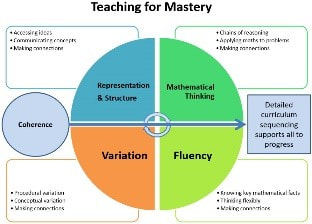
Monday 5 June 2023 | from 1600 – 1630
Five Big Ideas of Teaching for Mastery
Of particular interest to primary teachers and schools who have yet to engage with the teaching for mastery programmes.
Wednesday 7 June 2023 | from 1600 – 1630 | Early Number
Of particular interest to Reception and Key Stage 1 teachers who have yet to engage with a Maths Hub programme focussed on early number and Subject Leaders who are Key Stage 2-based.

Monday 19 June 2023 | from 1530 – 1600 | Oracy
Of particular interest to anyone exploring the development of oracy in maths and/or working on closing the disadvantaged gap.
Monday 3 July 2023 | from 1600 – 1630 | Executive Function
Of particular interest to teachers in all phases focused on studying learners in order to understand their mathematical thinking, the role of research and cognitive science and mathematics.

11/5/2023 0 Comments
SWIFT Events Newsletter | Issue 26

This issue includes a featured article and some highlighted programmes, courses and events. from our partners to support your professional development and enhance the work of your school. Simply click on the booking link, to the course or event you are interested in, to get more details or book straight on!
Featured in this issue we have:
SWIFT Curriculum Forum
Effective curriculum design and delivery sits at the heart of great education for children. Recent years has seen a renewal of leadership focus on curriculum. SWIFT Curriculum Forums are termly meetings that bring together middle and senior leaders from diverse educational settings to examine latest approaches to curriculum. We aim to bring together the best of regional, national and available evidence in a short, easy to access session.
Highlighted Programmes:
- SWIFT Summer Conference #SumConf2023
- Sixth Form Professional Community
- Celebrating Cultural Diversity | Lyfta
- Devon School Business Managers Association Annual Conference
- Early Talk Boost
- Events for your diary
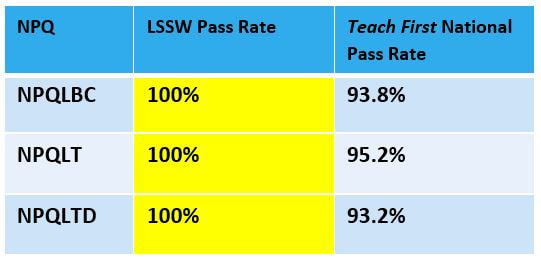
NPQ for Leading Behaviour and Culture (NPQLBC)
NPQ for Leading Teaching (NPQLT)
NPQ for Leading Teacher Development (NPQLTD)
Our Cohort 1b participants embarked on the programme in February 2022 culminating in the final programme assessment this February 2023.
In order to pass, all participants were required to engage in a minimum of 90% of the online seminars and face-to-face course sessions and to pass the final summative assessment, a written response to a school-based study, that draws on the content learned throughout the programme.
We are delighted to report on a 100% pass rate for the cohort.
This is a hugely significant result as nationally SWIFT/LSSW were one of only two Teach First delivery partners to achieve 100% passes (see the table below that shows the Teach First National pass rate):
Congratulations to all programme members who achieved this amazing regional result!
If you are interested in starting your own NPQ journey, we invite you to find out more about the Autumn 2023 application window below.
SWIFT is delighted to be working in partnership with Leading Schools South West (LSSW), Teach First and the National Institute of Teaching to make available to schools the full suite of reformed National Professional Qualifications (NPQs).
Report by Fiona McNeile, SWIFT Programme Manager (Appropriate Body Service, Early Career Framework and NPQs)
 |  |  |
The successful applicant will have the opportunity to build on excellent foundations laid through Years 1 and 2 and to outline new routes to improving the quality of programmes and extend further the range of schools that engage with SWIFT.
We seek applicants with the ability to deliver professional development at scale through partnership-based approaches and to lead the design and quality assurance of materials, seminars and conferences.

We are strongly committed to Diversity, Equity and Inclusion.
For us Diversity means ensuring that diverse representation is built into everything we do, Equity means we remove barriers to access and Inclusion means we embrace and respect the full range of human identities.
Safeguarding of children is our highest priority and the successful applicant will be required to complete an enhanced Disclosure and Barring Service check.
Salary | L19-L22* £69,022 - £74,283 p.a.
Full-Time / Part-Time, Permanent* (*subject to staffing review confirmation).
Start Date | 1 September 2023
Closing Date for Applications | Monday 22 May 2023 noon
Interviews | between Wednesday 24 and Friday 26 May 2023
N.B. This post is not suitable for ECTs (NQTs).
Phone | 01297 552327

"Never have we had such need for sensitive, subtle, nuanced school leadership as now."
You can also read about the Spring Term Curriculum Forum, the ECF Extra session on High Expectations and Behaviour and as part of our Diversity, Equity and Inclusion (DEI) work, read an interview with Louise Jaunbocus-Cooper, Co-Founder of MixEd. Have your say in the National Institute of Teaching (NIoT) Consultation on Professional Development and catch-up on the Mother of All Pay Gaps 2023 Conference.
We introduce our new sponsor Praestantia Technology and their IT services for school and SchoolPro share insights into Marginal Gains impacting attendance and how they could help your school.
Discover more about our sponsors' services from Lyfta who celebrate World Day for Cultural Diversity for Dialogue and Development and Atomi who provide engaging curriculum content to to find better ways to make learning fun. Educatering share their healthy food innovations for schools and find out about working as a supply teacher in the nursery/primary sector in Devon and Torbay with Exeter Supply Partnership.

Mixed heritage is the fastest growing ethnic group in the UK.
Mixed race is currently the most under-represented ethnic group in leadership with only 1% of senior leaders of mixed heritage.
Founded during the pandemic following the death of George Floyd, MixEd co-founder, Marcus Shepherd contacted Louise in response to her Tweets about her own mixed heritage. Louise has a White-British mother and Mauritian Muslim father and grew up in Oldham in the Northwest and engages in the religious and cultural aspects of her dual heritage – for example, celebrating Easter with her Mum and Eid with her Dad. Whereas, Marcus is a black man of White British and Ghanan heritage who has little contact with his Ghanan family and is immersed in his British family culture.
Together, Louise and Marcus believed that they could do something to get their voices across. Exchanges ensued and MixEd as a platform was born that featured their own blogs and with an invitation to other guest bloggers to contribute.
The website has evolved from mixed race to intersectionality, including religion and race and sexuality and race.
Both Louise and Marcus are senior school leaders and value the role of education in providing a space and an understanding about mixed identity.
Louise is Deputy Headteacher at Wellington School, a 11 - 18 years school with Academy status in Timperley in Greater Manchester and Marcus is Regional Education Director for E-ACT.
I believe it is always important to look at things from an educationalist’s perspective and to consider our outside work persona and how others are treated.
Student voice is an essential part of this conversation in education and you can read a powerful blog on the website by Jordan a secondary student of mixed race, sadly, on the fringes of criminality who writes about his experiences and hopes.
In my own school, we have looked at decolonisation of the curriculum that required a staff mindset change, beyond a departmental or teacher level as a culture shift about identity.
The biggest misconception for me is around the misconception about who you are.
I am known as “white passing” because I am still quite fair skinned despite my dual ethnicity that means it stays hidden. People sometimes say things to me - including casual Islamophobia - and do not realise that this is offensive to me. But because I feel that I do not fit into a neat ethnicity space because of the colour of my skin, it does not feel right to be offended. It is the opposite experience for Marcus, as people make misconceptions about his culture due to the colour of his skin and assumptions about his appearance of ethnicity.
Assumptions can be based on what people cannot see, which makes it a unique experience for people of mixed race.
However, it is significant to note that even people of mixed race are not a homogenous group.
They are all very different and with very different lived experiences.
I recall an incident when I was a child in McDonald’s in Rochdale with my Mum and brother, who is darker-skinned than me. A lady came up to my Mum and said “How lovely, you’ve got one dark and one white.” It was well-meaning, but clearly inappropriate and growing up in Oldham as a family we were used to overt racism.
In our school, we have a Gender Equality Council who have led awareness campaigns on period poverty, sexism, and gender pronouns. Our Race Equality Council Year 8 students led a thought-provoking assembly on afro-textured hair and talked about the history of hair discrimination dating back to the Transatlantic slave trade and will be leading a future assembly on micro aggressions. Whilst the LGBTQIA+ Council has looked at gender pronouns and making schools safe for transgender students.
“As Educationalists, you could say that we have the most important role to influence the future generation.”
2. Are you optimistic in our Black Lives Matter era?
Yes, I am optimistic that education is proactive in the post-George Floyd Black Lives Matter sphere and has galvanised thinking. But we need to do more.
A growing number of Schools and Multi Academy Trusts are approaching MixEd. So, there is lots of hope of positive change and young people are brilliant.
However, I am mindful of the recent Met Police report and blatant racism that was very disheartening, which I believe has a lot to do with the institutional structures.
I also worry about immigration rhetoric and racism in certain areas of the country that is polarising one group against another and is often used as a weapon against people. See the recent issues about immigrants in Liverpool.
So, there is wider work to be done.
3. What do you consider to be the success (es) of Mix-Ed to date?
Quite simply, but significantly, MixEd is a platform that amplifies the voices of people of mixed race and as part of our work, Marcus and I meet some amazing people who want to work with us and we are proud to be the trailblazers in this work.
Our collaboration with Diverse Educators is another important space for us and we are grateful for the opportunities provided to us.
4. What are your personal gains in leading Mix-Ed?
Huge!
Marcus and I are “very, very proud on a personal level” of what we have created today that was conceived from a chance chat on Twitter.
It still blows me away how many new wonderful people we meet who are passionate and engaged and want the same things as us and that we can help to make them feel safe.
It also affirms a sense that the world is a good place – especially, if and when, you read the doom and gloom on social media.
“It heartens me and keeps me going and we can only impact what we can impact.”
5. Looking to the future, what are your main aims for Mix-Ed?
The big one is to allocate some more time to MixEd from next year.
We will be relaunching the website and will be offering low-cost training to help retain and recruit minority ethnic staff to help support the recruitment crisis in the teaching profession; especially as so many people of mixed identity say that they do not see themselves represented on the staff body. We will also be offering a coaching model from September to coach Early Career Teachers and aspiring senior leaders.
And finally, we want others to continue to join us and to feel safe in their mixed identity.
We thank Louise and Marcus for sharing their experiences and for their ongoing MixEd work in providing a safe space for others of mixed ethnicity and identity and may it continue to be rewarding, as well as successful.
Interview by Jude Owens, PA to the SWIFT Executive Team

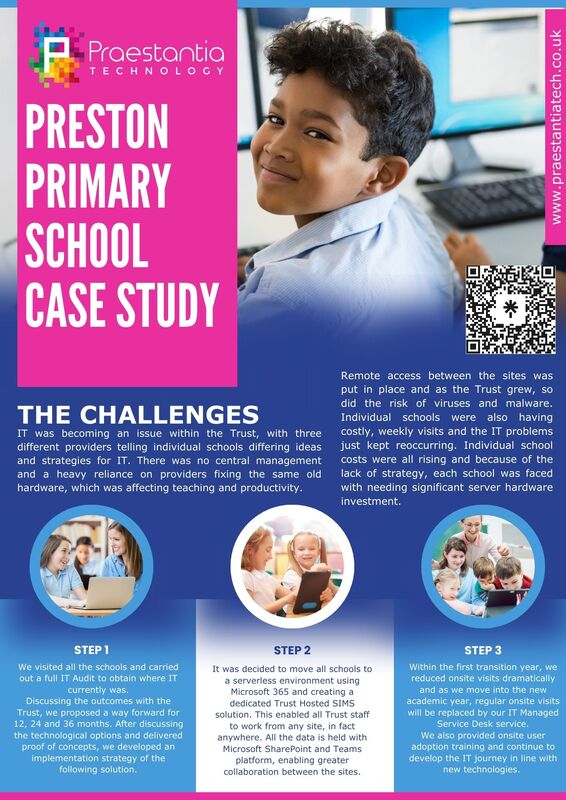
The Praestantia Team have a background in education and offer exceptional IT and audio visual solutions designed exclusively for education settings, including:
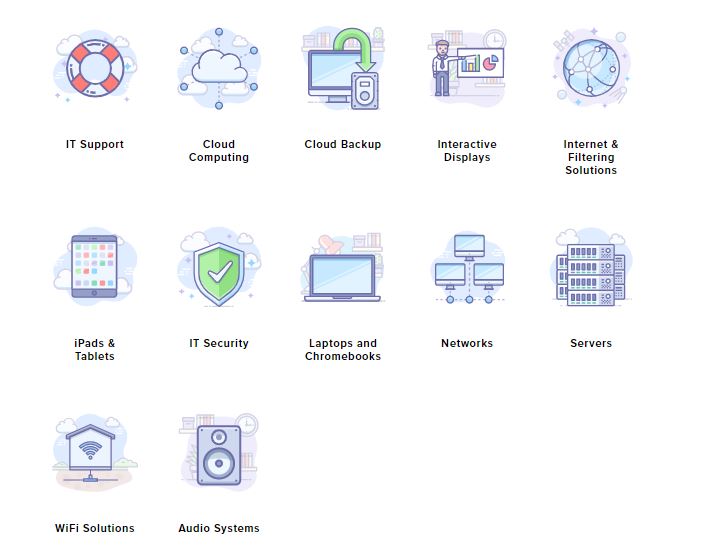
By looking after your tech, you can focus on the learning.

Sponsors also support and help SWIFT to invest in our CPD programme to bring high-quality and meaningful speakers and programmes.
Tuesday 20 June 2023 | 0930 to 1600
Broadclyst Community Primary School, School Lane, Broadclyst, Exeter, Devon EX5 3JG
Reading roadblocks can be a daily problem for school communities.
For many learners, significant roadblocks interrupt the journey to becoming an avid and fluent reader.
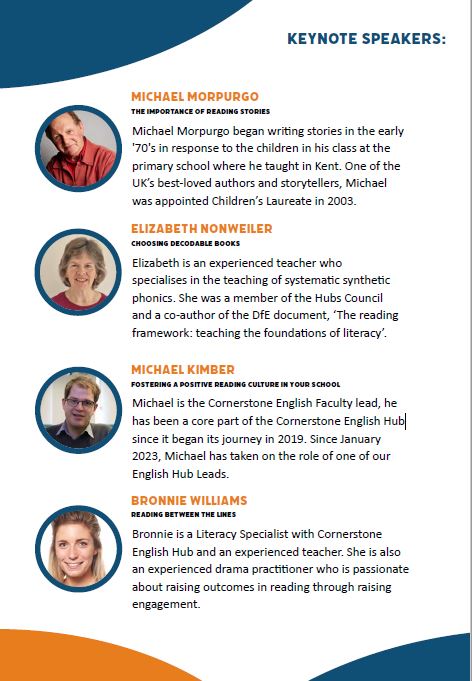
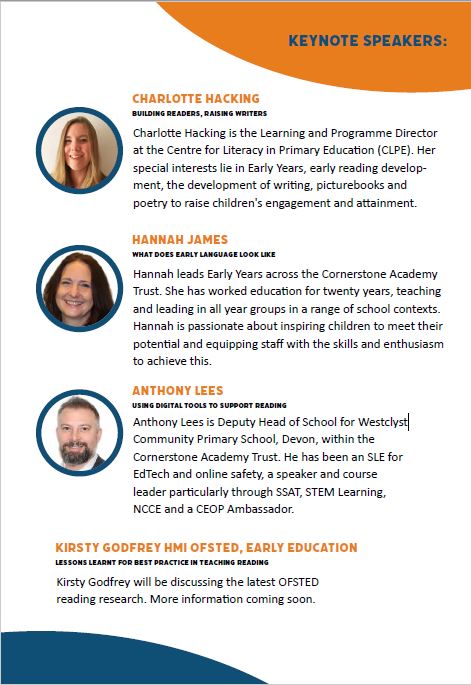
The Cornerstone English Hub 2023 Conference will explore the various challenges and hurdles faced by pupils as they embark on their reading journeys and will unpick strategies and approaches to make lasting differences to children and teachers.

Join like-minded colleagues at the 2023 Cornerstone English Hub Conference and explore these reading roadblocks and learn how to support every child to overcome the hurdles hindering their reading adventures.
Be inspired and reflect on the subject of reading.
 |  |

20/4/2023 0 Comments
SWIFT Events Newsletter | Issue 25
This issue includes a featured article and some highlighted programmes, courses and events. from our partners to support your professional development and enhance the work of your school. Simply click on the booking link, to the course or event you are interested in, to get more details or book straight on!
Featured in this issue we have:
SWIFT Summer Conference #SumConf2023
Taking place on Thursday 15 June 2023 at Exeter Racecourse, the amazing line-up of speakers, including Stephen Morgan MP, Shadow Schools Minister, reflects our vision to create world-class opportunities for leaders to learn, develop and connect. We are passionate about enabling schools in the South West to have access to the best of regional, national and research as we know many school leaders experience varying degrees of rural and coastal isolation.
Highlighted Programmes:
· Summer Curriculum Forum | Save the Date
· SWIFT Early Career Framework (ECF) Programme and Appropriate Body (AB) Service | September 2023 Sign-up Now Open
- Cornerstone English Hub Conference 2023 | Reading Roadblocks
- Whole School SEND Professional Development Groups
30/3/2023 0 Comments
SWIFT Spring Curriculum Forum
A Teacher of R.E. and former Local Authority adviser and inspector, Mary engages with pupils, teachers and leaders about learning, leadership and the curriculum. She has written extensively about leadership, school improvement and the curriculum, and most recently, ‘Huh: Curriculum conversations between subject and senior leaders’ with John Tomsett. A co-founder of the R.E. Quality Mark, Mary is a member of the Curriculum Advisory Group for Oak National Academy.
A curriculum should help to encapsulate and inspire, as well as to provide a QA standard that is strong, robust and clear and gets to the spirit and heart of the subject.
Teachers need to have higher expectations of pupils.
The tendency is to make classwork too easy and to think that they cannot cope. But they can and they want more demanding work.
Consider high challenge, but low threat.

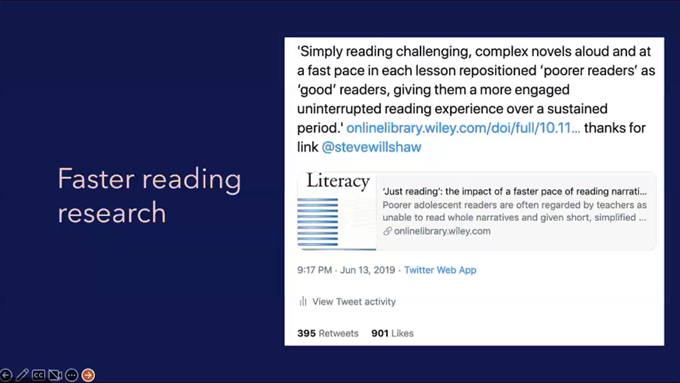
This was found to be especially true for disadvantaged students who often have a diminished reading diet.
Through reading, their curiosity was stirred and they could ask if they needed help or an explanation.
It is essential to consider and understand the concepts that go through the curriculum.
Concepts are like holding baskets for information and grow over time and are powerful for children’s learning.
Compare and contrast learning to deepen knowledge and consider the value of Tier 3 vocabulary.
Find the gateways into subjects. For example, routes into a topic through the origin of words (etymology), Latin and Greek that can deepen knowledge and skill-up pupils.
Dinosaur | from the Greek deinos ‘terrible’ + sauros ‘lizard’.
 |  |
It makes them feel clever and the role of the teacher is to make pupils feel clever.
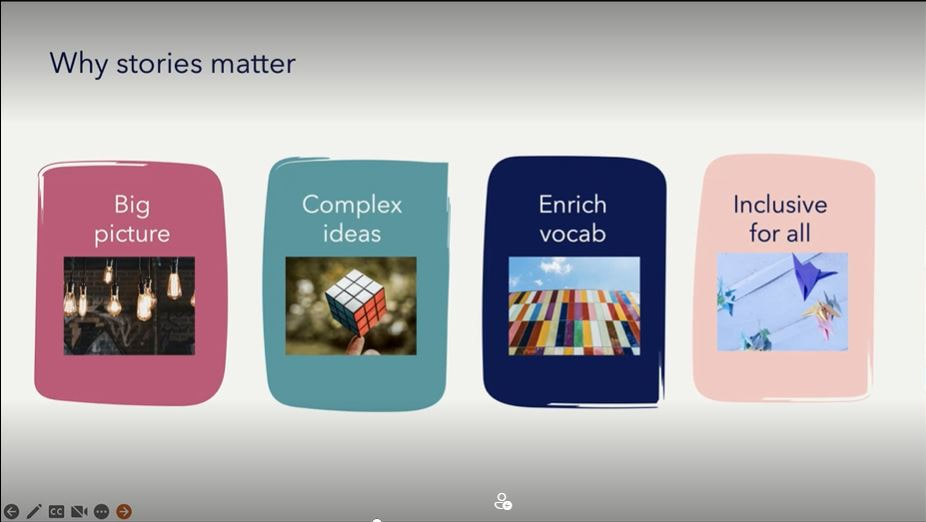
There is a value in learning through stories as we learn more if we have heard about a topic in a story and stories create the picture.
“It makes new knowledge stickier.”
But the reading deficit needs to be addressed.
Make reading enjoyable. It does not have to be considered work.
Think of reading as “a collective cuddle” and make time for reading in the day.
A well-chosen text will manage complex ideas, visuals, tone, concepts and rich vocabulary.
Use a high-quality text to underpin any element of the curriculum
Remember stories are not only in written format, but visual as well and see the high-quality recordings like Lyfta’s storyworlds.
 |  |
We thank Mary for her uplifting talk that makes refining the curriculum feel doable and dynamic.
Next academic year, SWIFT will be launching one of Mary’s programmes on Refining the Curriculum with five sessions of resources and opportunities, including access to online resources and self-guided sessions in which up to three school colleagues can take part (delivered by the Tarka Learning Partnership).
Check out the Myatt & Co CPD film library of films and webinars designed to support schools’ curriculum, pedagogy and leadership.
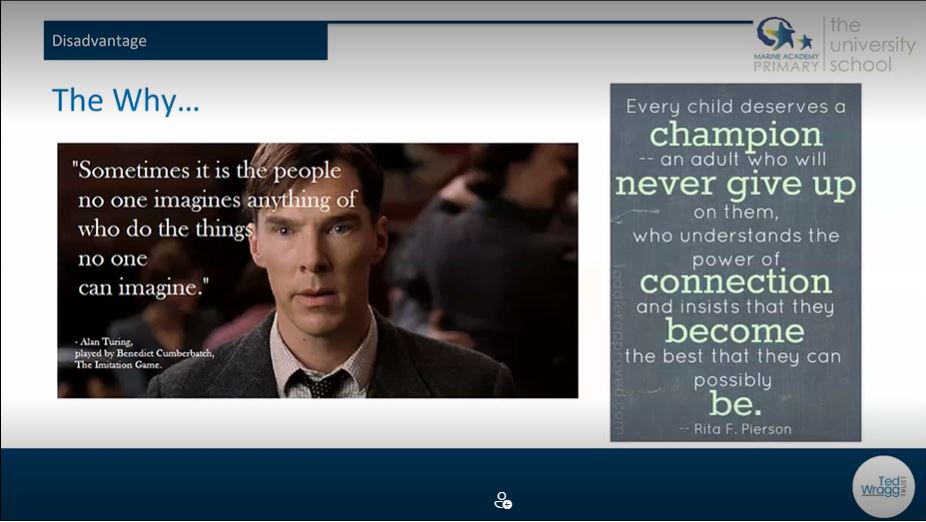
Siobhan strategically leads Disadvantage and SEND for the Ted Wragg Trust and has oversight of primary and all-through schools within the Trust, which is founded on the late educationalist and academic’s beliefs. There is a broad range of Pupil Premium across the Trust schools from 9% to 59% and social justice is key to support the less disadvantaged, and to provide an education which gives the less privileged access to the knowledge they need to succeed. But also, to give everyone a fair chance in their lives.
“Senior staff, including Governors and Trustees, lead the school with an unfaltering moral purpose. They are highly successful in raising pupils’ aspirations and reducing social disadvantage. Leaders place no ceiling on any pupil’s learning or ambitions.” (Ofsted)
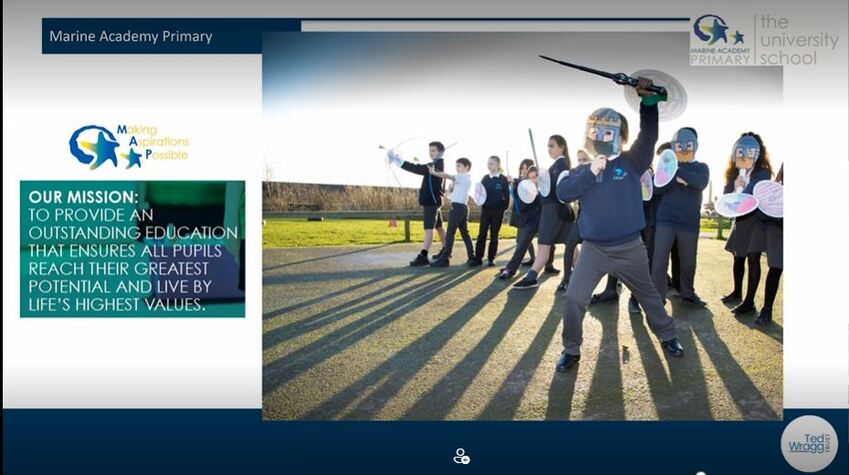
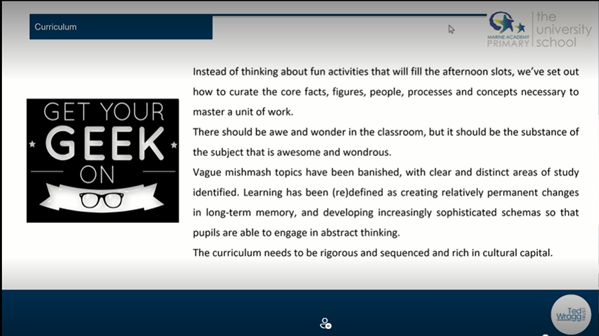
Not only knowledge is needed to nurture the best human beings. Curriculum is more than learning, and includes a behaviour curriculum, values and morals that are essential for children to develop and builds on cultural capital. Marine Academy Primary is “a school full of joy and rigour” with consistency.
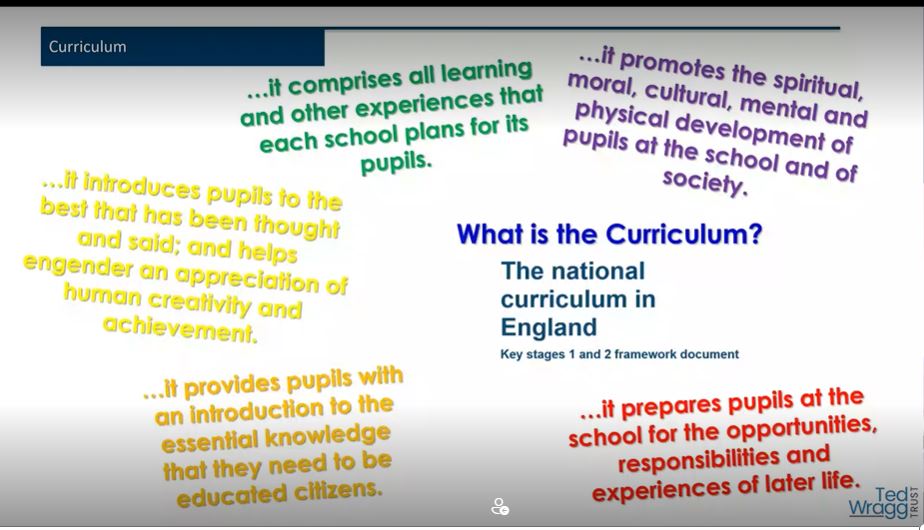
Too often curriculum is a buzz word. But it is important to remember that it is a not a trendy initiative. It should be the backbone of a school and is bigger than one person. It is better to do fewer things, but in greater depth and to consider how you create the core.
 |  |
Mindful of attendance issues across our region, a curriculum can go a long way to encouraging children to be in school as they do not want to miss out. Marine Academy Primary has a culture of high expectations and strong attendance and is proud of their 96.6% attendance to date this year, thanks to the hard work of the school team and 97% is the goal by the end of the school year.
Work on the curriculum began in 2018 when Reach Academy Feltham were given a curriculum innovation fund, working on the basis of no ceiling in the curriculum. It comprises all learning and is knowledge rich and considers how all children are going to achieve; tracking back to where children need to be at the end of their GCSEs in in considering what a successful 16-year-old needs to know; mapping lesson-by-lesson, and planning what sits underneath each lesson and ensuring the cognitive conditions are right.
Curriculum stars are awarded to the children across all the year groups who have shown a proficiency in the subject and are encouraged to be polite, articulate and confident and to talk about their learning as part of the living by life’s greatest values ethos. As part of Map Manners, they are guided with scripted conversations and the motto: “Work hard, be kind and amazing things will happen” so that ultimately, they are set up as best they can be for the future for secondary school and to be “well-rounded human beings.”
As a special addition to the presentation, next up, Marine Academy pupils: Salam, Jessica, Lilly and Isla-Rose memorably talked articulately to share first-hand their experiences of the curriculum:
Star | Sit up, Check the Speaker, Answer all Questions and Respect Others.
Shape | Think about how you articulate your voices when you answer in full sentences.
Map Manners | For example, holding the door open for someone or when you pass through and someone holds the door open for you, say thank you.
In English, the children have been learning about all different types of letters, e.g. complaint letters; as well as formal and informal techniques, and the use of emphasis.
Progression between year groups is a key part of the curriculum. For example, in Year 5, guided reading books are built on in Year 6 to help with English learning and the children have studied “Beowulf,” along with “Harry Potter and the Philosopher’s Stone” and “Harry Potter and the Chamber of Secrets.”
For the topic of the Industrial Revolution in History, the children have read a book about a little boy whose parents died from cholera and he was put into a factory to work. Whilst for Geography, in Year 5 they went on a fieldtrip to Bellever Forest and identified the evergreen trees and have studied push and pull factors that they regularly revisit and review from Years 4 to 6. For example, on the topic of population growing and decreasing, the children have considered wars and deadly diseases (pushes) and better health care (pull).
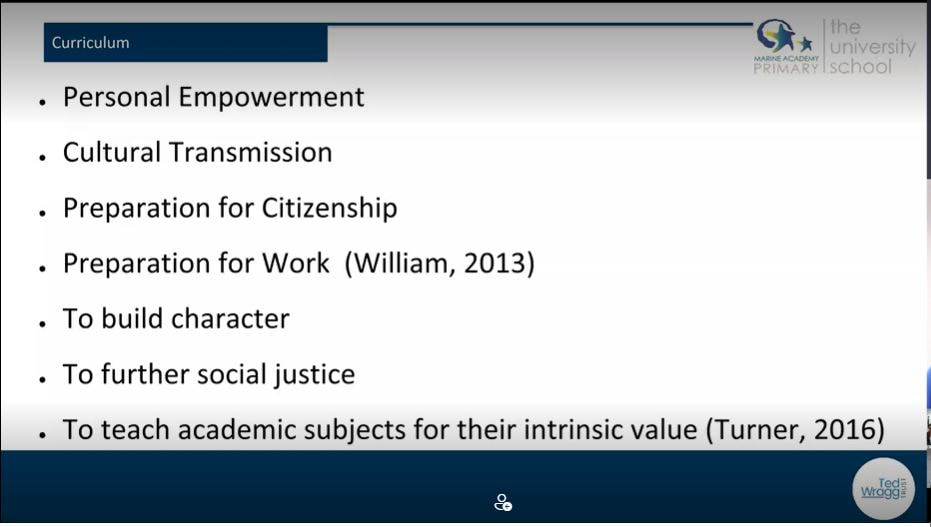 | 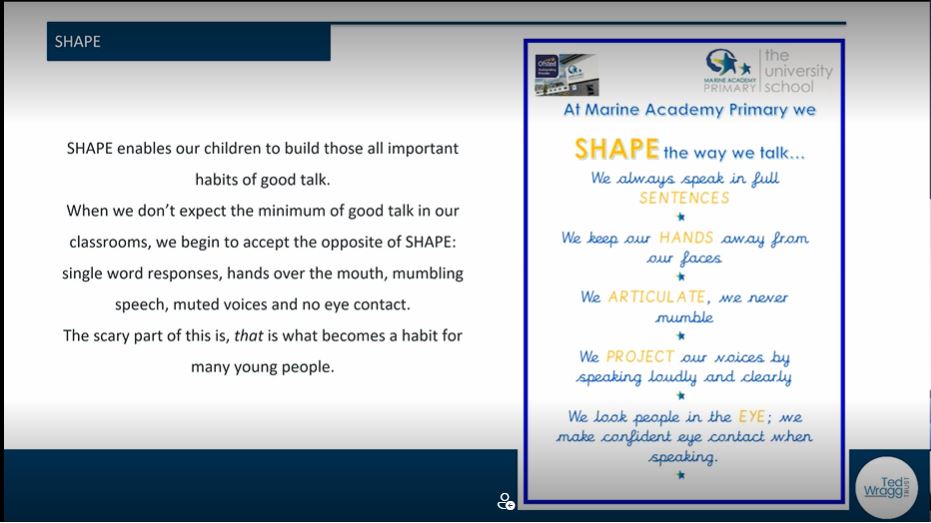 |
In addition, learning takes place outside the classroom with after school clubs and a residential trip in June, plus theatre trips and British Science Week and more. And if a child likes a topic, other books are suggested that they can read at home.
It was lovely to see and hear the children’s love of learning and how their knowledge is stored in their long-term memory thanks to their progress, which goes beyond curriculum documentation. The children are a lovely representation of an outstanding school.
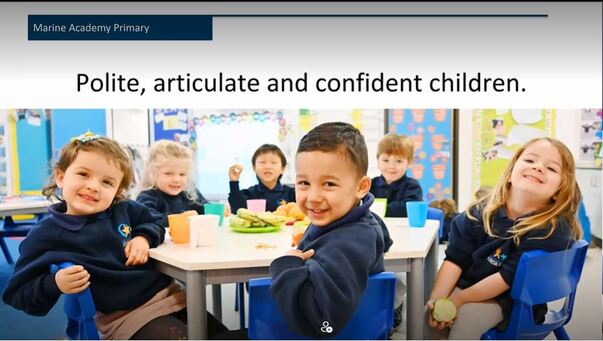
“The curriculum and the ethos of the school help pupils to develop a strong understanding of the value of people of all backgrounds. There is a culture of appreciation of others for who they are and what they contribute. Students in the sixth form run groups to celebrate those who are sometimes under-represented in wider society. This contributes to the inclusive culture of the whole-school community. As a result, bullying is very rare. If it happens, leaders stop it.”
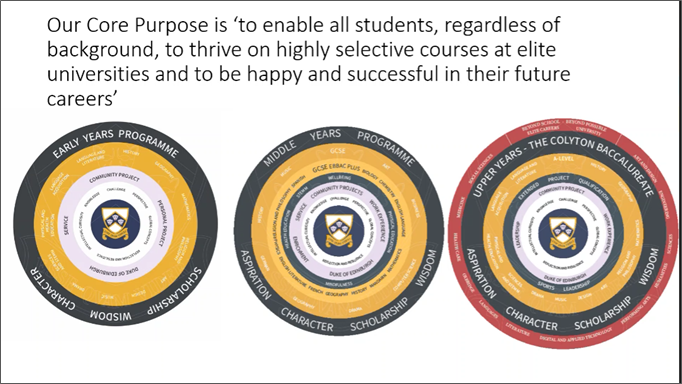
The message to students is that they can achieve for life beyond GCSEs and A Levels.
The curriculum is a way to support students to excel and thrive at the best universities. But also, to reach their dreams and goals beyond exams and university.
With endearing memorable references to The Wizard of Oz, Colyton not only seeks to prepare students to survive; but also, to thrive as creative, resilient, reflective and resourceful young people in an ever-changing world (“over the rainbow”). To show a willingness to go on and acquire further knowledge.
 |  |
Aspirations are not stable over time and can change and so, constantly, need to be negotiated.
Universities and colleges are working with schools and other organisations to improve the attainment of disadvantaged pupils in order to improve their chances of going onto higher education, gaining a good degree and a graduate-level job.
Tim cited the well-known work of Lee Elliot Major OBE, Professor of Social Mobility at Exeter University and the startling research that shows the South West is one of the worst performing regions for the number of disadvantaged students progressing to top universities.
A curriculum should have ambition, and direct and allow the opportunity to learn and increase attainment and for attainment to meet aspirations. Work sampling can be an effective tool in checking a curriculum is consistent and clear.
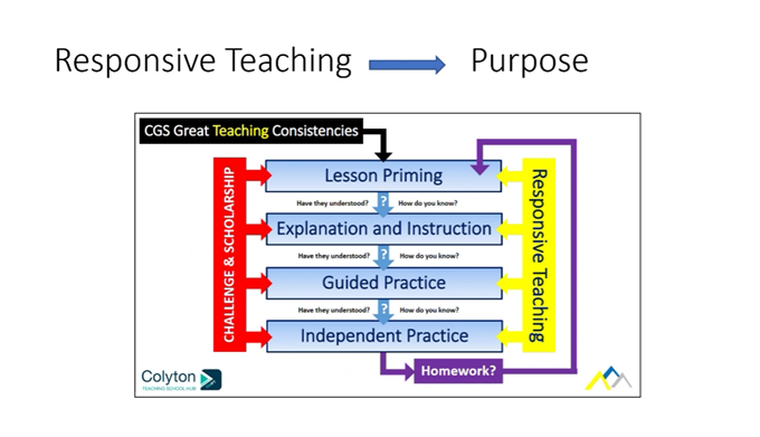
Extracurricular activities are not separate to the curriculum. They are part of the curriculum as real time activities. Students are almost instructed to try new activities that enables them to adapt their knowledge and skills for jobs and apprenticeships.
As part of the planning the Colyton SLT involved Heads of Department and Subject Teams and encouraged them to work backwards from Year 1 undergraduate to Year 7. They provided them with time to plan, by taking a day off teaching to meet as a team to plan their subject curriculum. In September/October, firstly, to help their thinking, following a review of the exam results and later in the Summer Term; which all supported buy-in from staff to be adapted and built upon with ambition.
The move to a digital environment has successfully helped to improve the work-life balance.
Once a curriculum is designed and implemented, it is important to check that it is engrained and to look at the building blocks and to see progression in everything the students are doing.
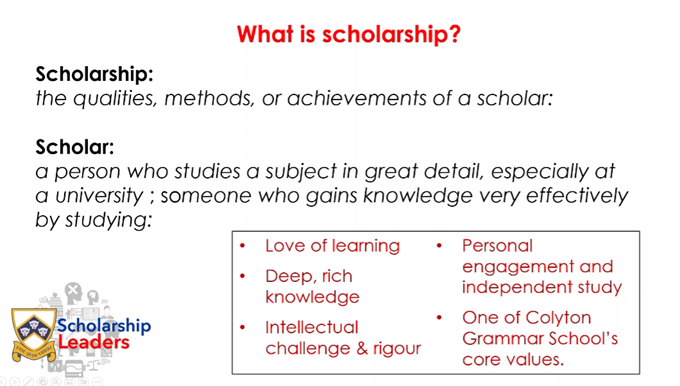 | 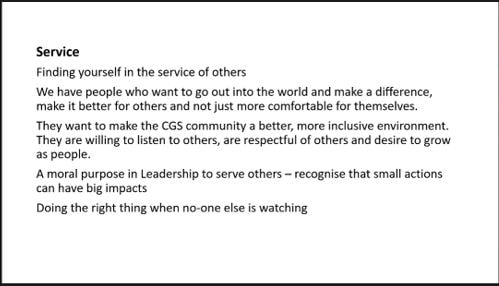 |
Colyton no longer uses effort grades. Students are given a grade on their scholarship and scholarship leaders are developed across the school. It is worth noting, this year, as a high achieving school, Colyton has 14% of Year 13s holding places at Oxbridge.
Tim concluded his presentation by returning to The Wizard of Oz and how Dorothy’s journey was as important as the end result of going home.
“Remember your experiences.”
There is always lots to learn and improve (and to continue the Oz theme, think also of the journeys of the Lion, the Tin Man and the Scarecrow) and it is expert teachers who help to create the pathways so that students can achieve these dreams.
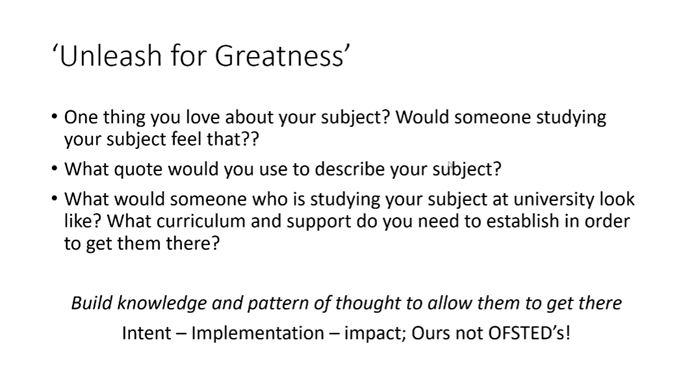
Tim has been teaching for thirty years, in which time he has gained experience through roles as Head of History, Head of Sixth Form and Director of Admissions. The majority of his teaching career has been undertaken in the Thames Valley region of the South East working in a variety of schools in both the selective and non-selective sector before moving to Devon from his position as Deputy Headteacher at Reading School.
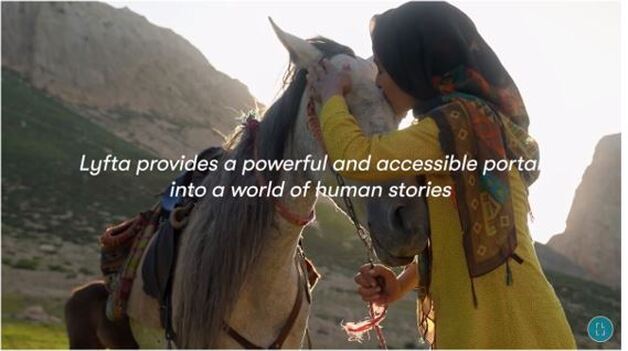
Lyfta’s Head of Educational Research, Dr Harriet Marshall works with teachers all around the world and brings the world into classrooms for those young people who might not be able to visit so that they can glimpse at the different ways of living and perspectives.
Based on the Global Learning Programme and sustainable goals, Lyfta enables young people to feel a connection with their learning and is a powerful resource that encourages a sense of belonging. Lyfta develops abstract concepts through human stories as 360 experiences that can be mapped to PSHE lessons and other subjects in the curriculum that enable young people to connect with challenging concepts that might otherwise feel distant. For example, deforestation and melting ice caps.
Report by Jude Owens, PA to the SWIFT Executive Team

Organised by The MaternityTeacher PaternityTeacher Project (The MTPT Project) and WomenEd, over 60 school leaders and teachers with experience of parenthood or currently on maternity/paternity leave attended the whole day.
Irrespective of delegates’ roles in schools, and/or the wider education ecosystem, the conference was opportunity to take practical action to address the fiscal motherhood penalty and to consider systematic change that school leaders could implement from the inside in order to take steps towards solutions.
The education sector has one of the worst gender pay gaps of all UK industries and motherhood is one of the most significant contributors to this injustice. The #WomenEd's Gender Pay Gap report published in 2021 by WomenEd, National Governors’ Association, ASCL and NAHT, revealed that the gender pay gap widens at every level for teachers and leaders aged 35 - 39 years. Crucially for both mothers and the teaching profession, this is the age that teachers are most likely to become mothers and when they are most likely to leave the profession. Otherwise known as the motherhood penalty.
Emma Sheppard, founder of The MTPT Project led one of the morning keynotes, contextualising and outlining the problem of the mother pay gap, and followed up in the afternoon keynote contextualising education within the wider industries; as well as considering flexible working, equal parental pay, and women’s contribution to the labour force, whether working or not.
Compared to other sectors, is education a worse situation for parents.
Or is it the case for everyone as a national, social and political issue?
Evidence shows variations across all industries with comparative parental leave pay. For example, Aviva became one of the first UK employers to introduce an equal parental leave policy, offering new parents in its UK business 12 months’ parental leave, with six months at full basic pay. John Lewis, has an equal parenthood leave that provides all new parents 26 weeks paid leave (14 weeks at full contractual pay and 12 weeks at 50% contractual pay).
However, nationally, 31% of employers only offer the statutory six weeks’ parental leave pay. So, parents in education would seem to be comparatively better off. But, as another example, London Fire Brigade[1] has a more generous maternity leave policy; although it is fair to say that it is a very male dominated profession with fewer mothers to support.
Vivienne Porritt, Co-Founder and National Leader of WomenEd led the keynote on the gender pay gap. Evidence shows that by retirement, female Headteachers aged 60 across all types of state-funded schools are over £17,000 per year worse off than their male counterparts; which can start from motherhood. Women’s salaries generally have steadier increases in salary by age; whereas men tend to see much larger increases, particularly towards the end of their career and this discrepancy is getting worse.
As a collective call to action therefore, the conference workshop sessions were designed with “a what to do” focus, moving on from the problem towards practical and concrete solutions by seeking to change policies and to empower others. For example, providing practical advice on how to fill in shared parental leave documentation.
Other speakers included Kinza Barrett, founder of Shared Parental Leave for Teachers who provided insight into how to add shared parental leave to holidays; which is not always possible in education and financially, can make a big difference for families. For example, in saving up for childcare and notably, it is a legal right.
Popular workshop sessions included The MTPT Project coach Malarvilie Krishnasamy’s Question Time panel on The Power of Coaching and Head of History and Assistant Headteacher at Vyners School Academy Trust, Simon Beale’s talk on What Can Fathers Do. Allyship from fathers is essential; not least in sharing childcare logistics. Typically, there is a chain effect. Mothers often take on more of the pick-up/ drop-offs of their children and the domestic load, which inevitably increases as babies create more work; because they are generally afforded longer maternity leave and get into better routines than fathers. So, when mothers go back to work, they may benefit from better routines, but they are nevertheless having to manage greater professional and domestic workloads. But by taking shared parental leave, fathers can also benefit from developing their own routines at home, so that both parents enjoy greater equity in their shared systems.
Another useful what to do session was Negotiating Your Worth in upskilling how to negotiate. Even if there is no budget or new parents are unable to return to work on a part-time basis, they can still negotiate for time to work from home or to work flexibly and thereby save money on paying for a nanny and/or breakfast clubs because of an early work start.
Other workshop sessions that were well received included the Power of Coaching, Shared Parental Leave for Holiday Pay, Full Time and Thriving, Mentoring and Role-Modelling for Mother-Teachers, "No"-ing Your Worth: Setting Boundaries for Unpaid Labour, Maternity Pay Policies, Fair Pay for Flexible TLRs and CPD and Progression for Mother-Teachers and The MTPT Project and WomenEd thank the contributors for sharing their expertise and experiences: Kathleen Cushnie, Deputy Head and Voicing Education Podcast Host, Emma Blake, Trust Lead Practitioner and WomenEd Network Lead, Chris Reddy, Coach and Founder of Bright Leaders, Abby Bayford, Executive Director of GAT Institute of Teaching, Lindsay Patience, Co-Founder of Flexible Teacher Talent and Bridget Clay, author of Unleashing Great Teaching and Director of School Leadership at Teach First.
WomenEd and The MTPT Project also thank the delegates for attending and sharing their experiences.
Feedback was optimistic and enthusiastic with personal commitments to bring back change to schools in order to support others.
WomenEd and The MTPT are grateful to Ambition Institute, Culham St Gabriel's Trust, The Chartered College of Teaching and Harris Federation for sponsoring this free event and for their commitment to addressing the motherhood penalty in education. Too often women are asked to do things for free, as a gesture of goodwill (the “guilt martyr” approach) or to do it for “the children” or “the community” and it was important to the organisers that all the speakers and keynotes were paid and valued for their presentations.
Commenting on this début Mother of All Pay Gaps Conference, Emma Sheppard, founder of The MTPT Project said:
“It was a great day! As well as a sense of togetherness, there was a positive feeling of our parental community and a particularly lovely characteristic was how several of our session leads and panel guests were talking and delivering with their babies on their laps having a feed! Thank you to everyone.”
Finally, save the date for next year’s conference! Saturday 9 March 2024, again, beautifully timed the day before Mothering Sunday.
[1] (a) Up to 12 months maternity leave, of which the first 26 weeks will be ordinary maternity leave (OML) and the remaining 26 weeks will be additional maternity leave (AML). (b) OML which will be paid at a rate of 15 weeks at full pay and 11 weeks at half of normal pay. (c) AML which will be paid at a rate of 13 weeks at half of normal pay. The remaining 13 weeks will be unpaid.
Report by Jude Owens, PA to the SWIFT Executive Team
 |  |
The “Extras” are free optional sessions available to SWIFT Early Career Teachers and Mentors and their wider school setting to enhance their experience on the ECF and benefit their reflection and practice in their classroom.
Founded on 80 years of combined teaching experience and enthusiasm aplenty, Sonia and Wendy’s love of education, teaching and children was palpable and is also rooted in their backgrounds. Wendy comes from a background of a family of six children who were nurtured by their parents according to their different needs and nurturing has been part of Wendy’s practice as a teacher and school leader.
Sonia and her twin were part of the Born to Fail study for their first 15 years (which is also the title of one of her books). Financed by a grant from the national Children's Home, the Born to Fail study looked at socially disadvantaged children born in Britain in the week of 3 - 9 March 1958. As children, Sonia and her sister did not care, because those around them did not care; which included failing her English Language O Level five times – although she has made up for it with her prolific 55 published books.
There needs to be care and support.
Teaching is a learning journey for everyone.
Even when it gets tough, it is a learning experience. Teachers should not always blame themselves.
“Embrace the trips and slips.”
If a lesson does not work, consider the many other external reasons and events that might be taking place at home. For example, the pupil might be a young carer with family pressures.
An understanding of children’s backgrounds can help to support them in school and in addition, an awareness of the cyclical pattern of parents who failed at school and do not know how to parent their own children. The past will affect the present.
This needs to be a whole school approach.
“Go into the classroom in a positive way and speak to colleagues in a positive way.”
Share your good practice and any concerns.
 | 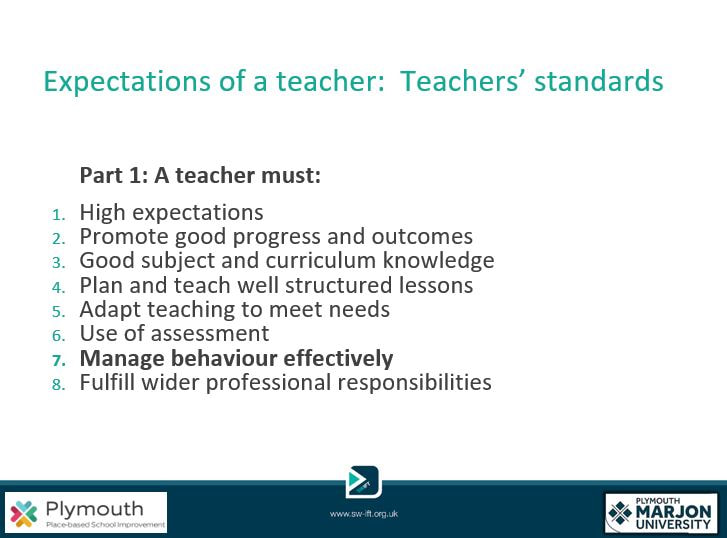 |
Relationships are key in school.
“You’ve got to give what’s inside you.”
Children can work out the frauds and if you do not want to get to know the children in your class, they will not want to get to know you.
Maintaining boundaries, of course.
Developing strong relationships with parents at home is equally important, and requires the development of skills to enable positive relationships with parents. Involve the parents every step of the way.
Consider the six Principles of Nurture:
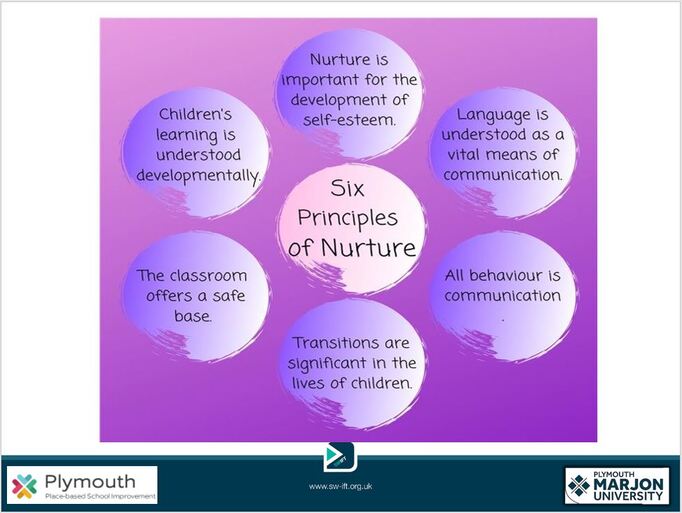
From home to primary school, then to secondary school and even consider the challenging and sometimes traumatic transitions between lessons.
Teachers need to be flexible through the school day.
We are all learning.
“If we can’t teach to the children, then we can’t teach.”
If a child does not (appear to) want to learn, the issue might be that the lesson needs to be pitched in a different way to meet their primary needs. Maintain high standards, and engage with every pupil and know them and understand how they learn.
Be aware of misconceptions.
If a child will not sit still, it might be that they need a sensory assessment and/or they might have an undiagnosed/ unmet behaviour or learning need.
If a teacher is shouting all the time, they have lost control.
On-call systems risk disempowering the teacher as the pupil perceives that that teacher does not want them in the class or cannot teach them if, and when, they are withdrawn from their lesson for poor behaviour.
Learn from experience.
Talk to the child. Confront without confrontation.
 |  |
When children feel safe and loved they will thrive and need the following eight things to thrive:
- Security (shelter, food, clothing, medical care and protection from harm)
- Stability (from family, community and school)
- Consistency.
- Emotional support.
- Love.
- Education.
- Positive role models.
- Structure.
Rather than changing the child, change the support around them, which requires the skills to support the young person.
- We are all learners
- High standards
- Relationships
- Curiosity
- Know the child
- Reflection
SWIFT thank Sonia and Wendy for leading this insightful and positive session on High Expectations and Behaviour, which was a collaborative effort between Plymouth Place-Based School Improvement, Plymouth Marjon University and SWIFT.
The next session in the series will take place on Thursday 18 May 2023 at 1600 and delves into 'inclusive practice' in all classrooms. Look out for more information in the ECF Programme Weekly Newsletter.
By Jude Owens, PA to the SWIFT Executive Team
24/3/2023 0 Comments
SWIFT Events Newsletter | Issue 24
This issue includes a featured article and some highlighted programmes, courses and events. from our partners to support your professional development and enhance the work of your school. Simply click on the booking link, to the course or event you are interested in, to get more details or book straight on!
Featured in this issue we have:
SWIFT Summer Conference #SumConf2023
Taking place on Thursday 15 June 2023 at Exeter Racecourse, the amazing line-up of speakers, including Stephen Morgan MP, Shadow Schools Minister, reflects our vision to create world-class opportunities for leaders to learn, develop and connect. We are passionate about enabling schools in the South West to have access to the best of regional, national and research as we know many school leaders experience varying degrees of rural and coastal isolation.
Devon Pupil Premium Support Network
Developed for existing and new Pupil Premium Leads in Early Years, Primary and Secondary settings, this series of workshops provides structured support to design, write and prepare an effective Pupil Premium strategy.
Huh Devon Leaders Course | Refining the Curriculum
A self-paced eight session course on curriculum leadership with Mary Myatt and John Tomsett.
Highlighted Programmes:
· Jurassic Math Hub Annual Conference
· Professional Communities
· Events for your diary
We understand that pressure on budgets and staff time is making it increasingly difficult for schools to offer students a broad range of experiences. With school trips and other enrichment activities sometimes seen as expensive and resource-heavy for a regular basis, children can miss out.
As part of the countdown to Earth Day, our sponsor, Lyfta would like to invite classes in your school to join them for an exciting FREE live lesson and go on a virtual journey to Ethiopia to explore themes of sustainability, creativity and inventiveness.
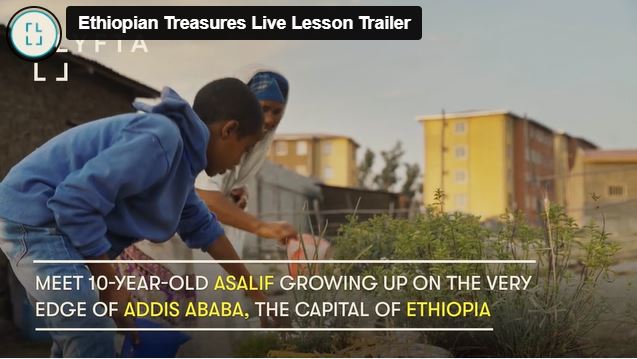
As the live lesson is led by Lyfta, there is no teacher prep work required.
You only need to sign-up and join with your class on the day via Zoom!
There will also be an exciting opportunity for students to be part of the Lyfta Earth Day competition with the chance to win a book bundle worth £100.
Exposure to Lyfta’s rich human stories is helping young people across the UK build their cultural capital, curiosity and oracy, as well as develop vital knowledge, skills and understanding.
It provides the opportunity for pupils and students to be exposed to people, places and perspectives to whom they might otherwise not have access, in a highly accessible and cost-effective way.
This issue includes a featured article and some highlighted programmes, courses and events from our partners to support your professional development and enhance the work of your school. Simply click on the booking link, to the course or event you are interested in, to get more details or book straight on!
Featured in this issue we have:
Devon Pupil Premium Support Network
Developed for existing and new Pupil Premium Leads in Early Years, Primary and Secondary settings, this series of workshops provides structured support to design, write and prepare an effective Pupil Premium strategy.
SWIFT Celebrates Diversity, Equity and Inclusion
As part of our Diversity, Equity and Inclusion commitment SWIFT is working with Hannah Wilson, co-founder of Diverse Educators. Learn more about the support and training that they offer.
Highlighted Programmes:
- SWIFT Summer Conference #SumConf2023 |Speakers including Stephen Morgan MP, Shadow Schools Minister
- Curriculum Forum | Tuesday 14 March 2023 | 1500 – 1630 |Keynote Mary Myatt
- Inclusion: Teaching and Learning to Unlock Social Mobility for Every Child | March 2023 |

In this issue, ESW Associate & Strategic Leader of Teaching & Research Schools | Education South West, Roger Pope CBE reflects on the broader picture of the teacher strikes:
"Strikes are a result of that unspoken social contract breaking down. What you do ceases to have the satisfaction of a vocation, and has become instead just work."
Roger commends the Holy Catholic Family MAT for their intentionally designed five key steps strategy for making work rewarding. Read the entire feature in the newsletter link below and see the Data Protection guidance for schools relating to the strikes from our sponsor, SchoolPro TLC.
Find out about the LSSW Study Visit Programme, the first session of the How to Teach Boys to Succeed in School programme led by Teacher and Author, Mark Roberts and if you've ever wondered about the story behind our SWIFT artwork, you can read an interview with our artist Olivia.
Discover more about our sponsors' services.
Lyfta's rich human stories that open up a world to young people to build their cultural capital, curiosity and oracy, Educatering's lovely food for schools and working as a supply teacher in the nursery/primary sector in Devon and Torbay with Exeter Supply Partnership.
SWIFT News
Archives
March 2024
February 2024
January 2024
December 2023
November 2023
October 2023
September 2023
July 2023
June 2023
May 2023
April 2023
March 2023
February 2023
January 2023
December 2022
November 2022
October 2022
September 2022
August 2022
July 2022
June 2022
May 2022
April 2022
March 2022
Categories
All Advice Annual Conference Appropriate Body Service Attendance Character Education Conferences CPD Provider Cultural Diversity Curriculum Forum Curriculum Hubs Data Protection Department For Education Diversity Equity And Inclusion Early Career Framework Enrichment Activity GDPR Golden Thread History Teaching Interview IT Support Leadership Forums Literacy Masterclasses National Institute Of Teaching New News Newsletters Partnership Physical Education Professional Communities Professional Development Reading Recruitment School Leaders Schools SEND Sponsor Summer Conference Supply Teaching Sustainability SWIFT Central Team Teachers Teaching School Hubs
 RSS Feed